
Lobbying as an Institution of Democracy: Between Political Stereotypes and the Formation of a Professional Market in Ukraine – Discussion with Oleksandr Fediyenko, Member of Parliament of Ukraine
A new professional sphere is gradually emerging in Ukraine – the institution of lobbying, which in developed democracies is an integral part of the public policy-making process. However, at the national level, this institution is still in its infancy, and the term “lobbying” itself remains burdened by historical and legal stereotypes.
Dialogue between the Parliament and the professional community
Regular meetings between representatives of the lobbying community and the parliamentarian are of fundamental importance.
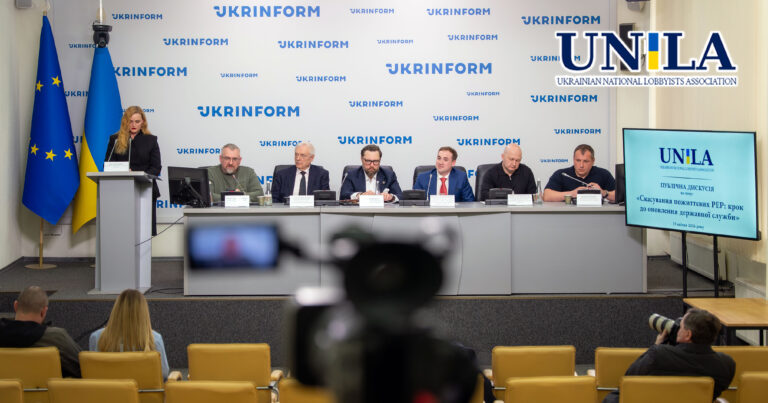
During the meeting with the People’s Deputy of Ukraine Oleksandr Fediyenko on March 06, 2026, a meaningful discussion was held to discuss the formation of a new legal culture of interaction between the parliament, the expert community and business.

As a Member of Parliament of Ukraine, Oleksandr Fediyenko is known for his systematic approach to lawmaking and work on comprehensive legislative solutions in the field of public administration and digital policy.
That is why the activities of the Higher School of Lobbying today are gaining much wider significance than just an educational initiative. In fact, it is an expert platform for professional dialogue between lobbyists, academics, and members of the Ukrainian Parliament, aimed at developing a civilized understanding of lobbying as a legitimate mechanism for civil society and business to participate in public policy making.

Despite the adoption of special legislation on lobbying, a significant number of parliamentarians still demonstrate caution in using the term. The reason for this is the long-standing practice of criminalizing any form of influence on the state decision-making process, which has been formed in the Ukrainian law enforcement and anti-corruption system for decades.
In fact, according to the panelists, today there is a situation where the very word “lobbying” in parliamentary communication may cause caution, as it is associated not with representation of interests, but with potential criminal consequences.
At the same time, from the point of view of political and legal theory, the institution of lobbying is an integral part of representative democracy.
However, the Ukrainian anti-corruption paradigm often perceives any influence on public policy making through the prism of potential corruption, which creates a normative conflict between democratic practice and law enforcement.
The need for a legal paradigm shift
The participants of the expert dialogue agree on one thing: the formation of a civilized market for lobbying services in Ukraine requires comprehensive legislative changes.
We are talking, in particular, about:
- clarifying the legal definition of lobbying;
- eliminating legal risks for parliamentarians and officials;
- development of professional standards and educational programs;
- introducing transparency registers and codes of ethics.
Another important aspect is the educational work with state institutions, primarily with law enforcement and anti-corruption agencies. After all, a significant number of officials still have a simplistic view that a lobbyist is a person who exercises illegal influence on the government.
In fact, in democratic countries, lobbying is a tool for improving the quality of public policy, investment attractiveness and economic competitiveness.
Formation of a civilized market for representation of interests
In fact, Ukraine is only now forming a full-fledged institution of public interest representation, which in most democratic countries is one of the mechanisms for balancing political, economic and social interests.
Not only the development of the new profession, but also the quality of the legislative process itself depends on how quickly transparent lobbying rules, professional standards, and educational infrastructure are established.
After all, civilized lobbying is not a backroom deal, but an institutional mechanism for public participation in shaping public policy based on transparency, professionalism, and responsibility.