
Digital elections as a challenge and a chance for Ukraine: the key role of interdisciplinary approach by Professor Tetiana Dmytrenko
On March 20, Kyiv hosted a landmark roundtable discussion “Digital Elections: Security Issues of Organization and Conduct” that brought together leading Ukrainian and international experts in law, economics, public administration, and IT technologies. The event was organized by the V.M. Koretsky Institute of State and Law of the National Academy of Sciences of Ukraine in cooperation with the Ukrainian National Lobbyists Association.
The discussion was distinguished by its broad interdisciplinary nature: not only lawyers and representatives of government institutions, but also leading experts in the field of digital and IT technologies, cybersecurity, and digital governance took part in the roundtable. This made it possible to consider the issue of digital elections as a complex system where technology is inextricably linked to law, economics, and security.
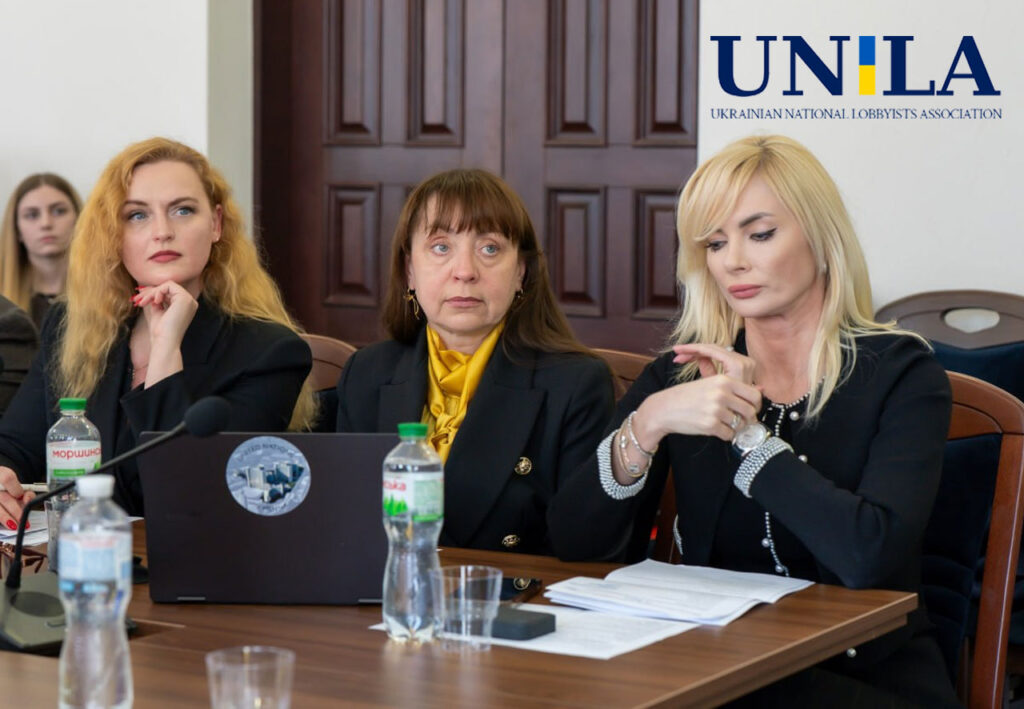
One of the key experts at the event was Tetiana Dmytrenko, Doctor of Economics, Senior Research Fellow, Professor of the Institute of Postgraduate Studies at the Academy of Financial Management, Head of the NGO “Ukrainian Modern Digital Science”. In contrast to the narrow technological approach, Dmytrenko proposed to consider digital elections as a sociotechnical system where legal, financial, technological and security components interact.
According to her, the current conditions: war, global cyber threats and digital transformation of the state require a fundamentally new approach to the organization of the electoral process.
Risk-based model as a basis for trust
The key contribution of the expert was the concept of an interdisciplinary risk-based approach. She emphasized that the introduction of digital elections is impossible without:
- integration of legal regulation,
- financial control,
- cybersecurity,
- protection of personal data,
- mechanisms for building public trust.
In fact, the expert proposed a model in which digital elections are evaluated not only by technical parameters, but also by an integral performance indicator that includes the level of security, trust, and sustainability of the system.
Financial dimension: new risks of the digital age
Tetyana Dmytrenko paid special attention to the financial aspects of the digitalization of elections, a topic that often remains out of the focus of public debate.
She warned that the use of virtual assets and cryptocurrencies opens up new channels for:
- hidden financing of political campaigns,
- external influence on elections,
- circumventing sanctions and regulatory restrictions.
The pseudonymity of transactions and the global nature of digital finance make it difficult to control the origin of funds. This necessitates the introduction of risk-based monitoring mechanisms and the use of blockchain analytics tools.
Cybersecurity: the limits of technological optimism
Another important focus of the speech was the issue of cybersecurity. Ms. Dmytrenko emphasized that even the most advanced electronic voting systems remain vulnerable at all stages of the election process.

In this context, she supported the position of the roundtable’s IT experts on the need for a multi-level security architecture, which should include:
- technical solutions,
- organizational procedures,
- legal mechanisms.
At the same time, the expert drew attention to the limitations of popular technological solutions, including blockchain: despite the potential for increased transparency, they are not a universal tool and should be used only as part of a comprehensive system.
Gradual implementation as the only possible way
One of Tetiana Dmytrenko’s key recommendations was the idea of a phased introduction of digital elections.
In particular, it is proposed:
- testing individual elements of the system at the local level,
- use of digital tools in internal voting,
- gradual scaling after reliability checks.
This approach not only minimizes risks, but also adapts the system to the real conditions of operation in Ukraine.
The roundtable demonstrated an important trend: the issue of digital elections is no longer purely legal or technical. The participation of leading IT specialists, cybersecurity experts, economists and academics confirmed that the future of the electoral process will be determined by technology and institutional mechanisms.