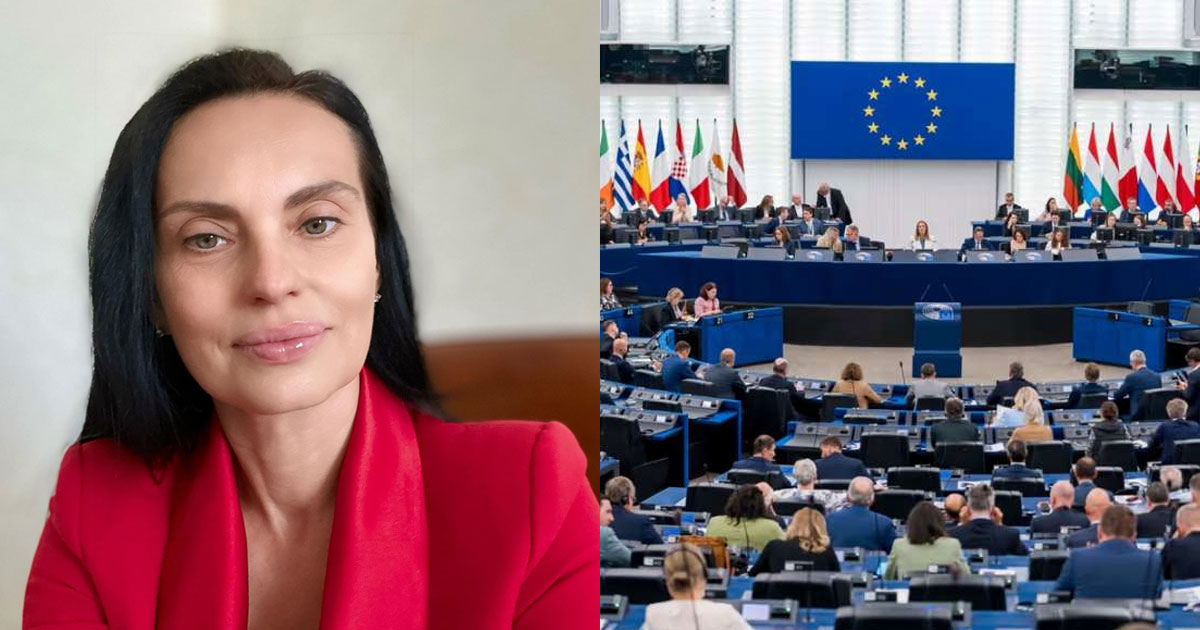
What are the strategic implications for European democracy of the new EU directive on lobbying regulation – commentary by Iryna Shapovalova
By adopting a position on updated transparency rules for third-country lobbying , the European Parliament has outlined a much broader policy framework than just technical improvements to regulation.
The decision reflects the EU’s conscious need to strengthen its own resilience to external influences, as foreign interference has become a systemic threat in recent years, from non-transparent funding of think tanks to covert attempts to shape the content of legislative decisions. In this context, the new directive is not only a step toward greater openness, but also an element of protecting the integrity and security of political processes in the European Union.
The key logic of the document is to ensure transparency in cases where organizations, consultants or communication structures act on behalf of foreign states or related entities. This is a diplomatic instrument where the EU has to strike a delicate balance. On the one hand, there is a need to protect democratic institutions from covert external influence, and on the other hand, there is a risk of unnoticed crossing the line and creating a mechanism that resembles the practices of labeling “foreign agents” known from authoritarian regimes.
The EU is deliberately distancing itself from such models, as they are often used to put pressure on civil society, independent media and think tanks, replacing the concept of transparency with tools of stigmatization and political control. That is why the new rules clearly limit their scope: any form of legitimate international interaction remains outside the scope of regulation. This approach should ensure both the protection of democratic processes and respect for the freedoms that form the basis of the European order.
I believe that this strengthening of Ukraine’s political subjectivity in the EU, these new rules of transparency, create more structured conditions for Ukraine’s interaction with European institutions. They form a clear framework within which Ukrainian state and non-state actors can legitimately influence political processes in the EU, and this strengthens the perception of Ukraine as a mature and responsible partner.
Unified European standards of transparency allow Ukraine to prevent any suspicions of non-transparent forms of interaction, which is already about building trust in Ukrainian diplomacy, which contributes to more predictable and trusting cooperation with European regulators, parliamentary groups, business and civil society.
The EU document emphasizes that the protection of democratic processes and transparency of political communications is an essential element of the European model. For Ukraine, this means that such standards become part of the country’s “political model” on its way to membership. At the same time, this gives Kyiv the opportunity to position itself as someone who is ready to integrate European rules, not just adapt to them.
The new rules provide Ukraine’s diplomatic and political communications in Brussels with a clear and secure regulatory framework. This is important because Ukrainian participation in EU decision-making is no longer perceived as “third country influence” in a negative sense and is instead seen as a normal part of the European process.
The fact that the EU avoids any models that might resemble aggressive mechanisms of influence is strategically important for Ukraine. This means that Ukrainian media and research and analytical institutions operating in the European space do not risk being stigmatized or politically labeled. The EU’s openness and legal approach create a safe environment for their activities and international presence.
I conclude that the adoption of the new transparency rules by the European Union is a step towards the formation of a modern system to protect its political infrastructure from non-transparent influences. It enhances the openness of decision-making and strengthens trust in European democracy. For Ukraine, this decision creates a more predictable and civilized space for interaction with European institutions, allowing it to promote its interests in a legitimate way and without the risk of being wrongfully labeled as a “source of external influence.” In this context, the new standards provide Ukraine with an opportunity to strengthen its political subjectivity and demonstrate compliance with European norms, while the real value of these changes will depend on the EU’s ability to maintain a balance between protection and freedom, preventing regulation from becoming an instrument of political pressure. This will determine the quality of the European political space and the legitimacy of Ukraine’s participation in general.