The Ukrainian National Lobbyists Association joined the professional discussion on codification of legislation on the protection of statehood and the status of defenders
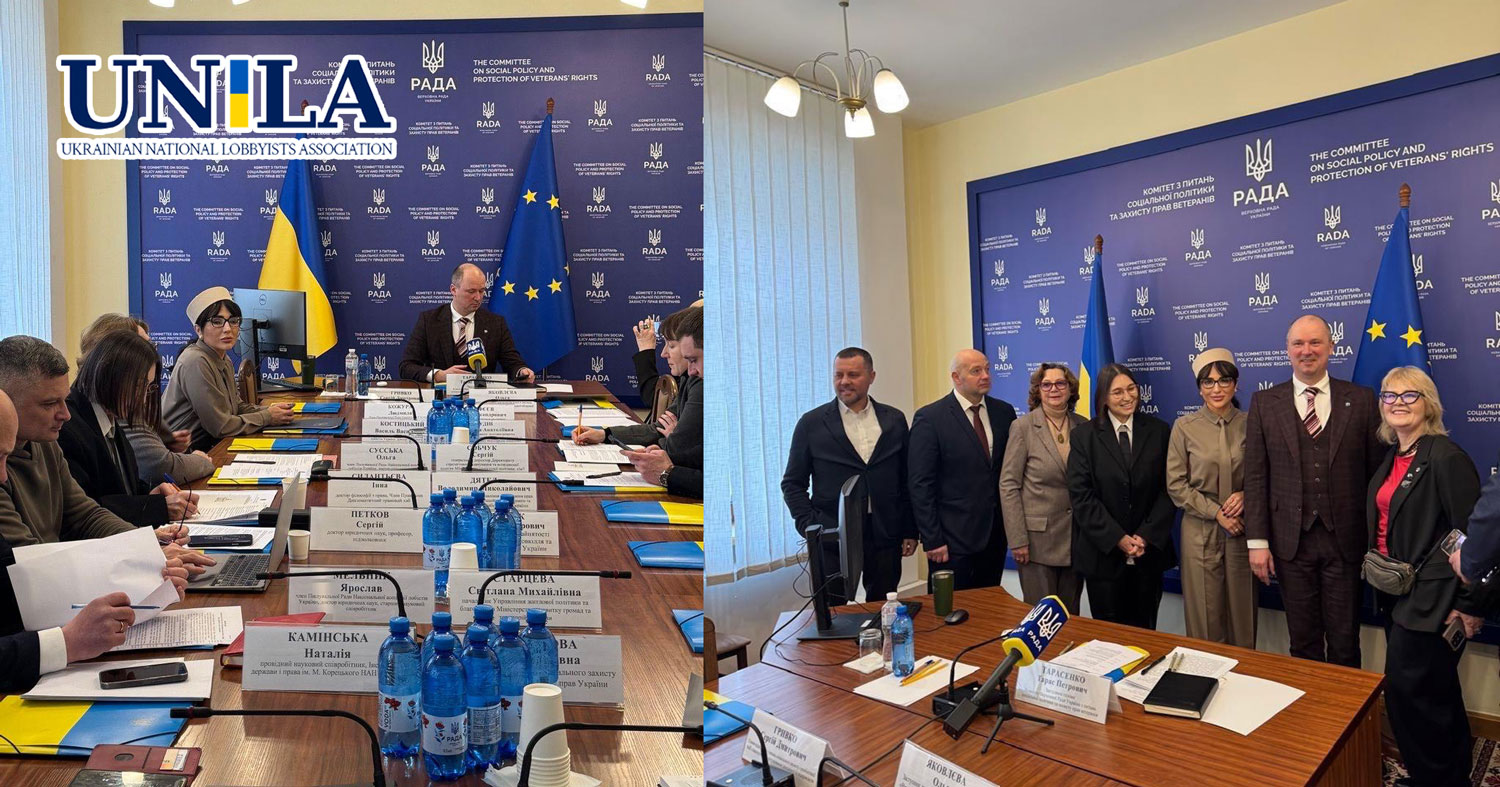
On February 26, 2026, at the invitation of Taras Tarasenko, People’s Deputy of Ukraine, a roundtable discussion on “Codification of Legislation in the Field of Statehood Protection and Status of Defenders” was held. The event became a professional platform for discussing the conceptual foundations of the future codified act, its structure, methodology and compliance with the current challenges of legal regulation of veteran policy.
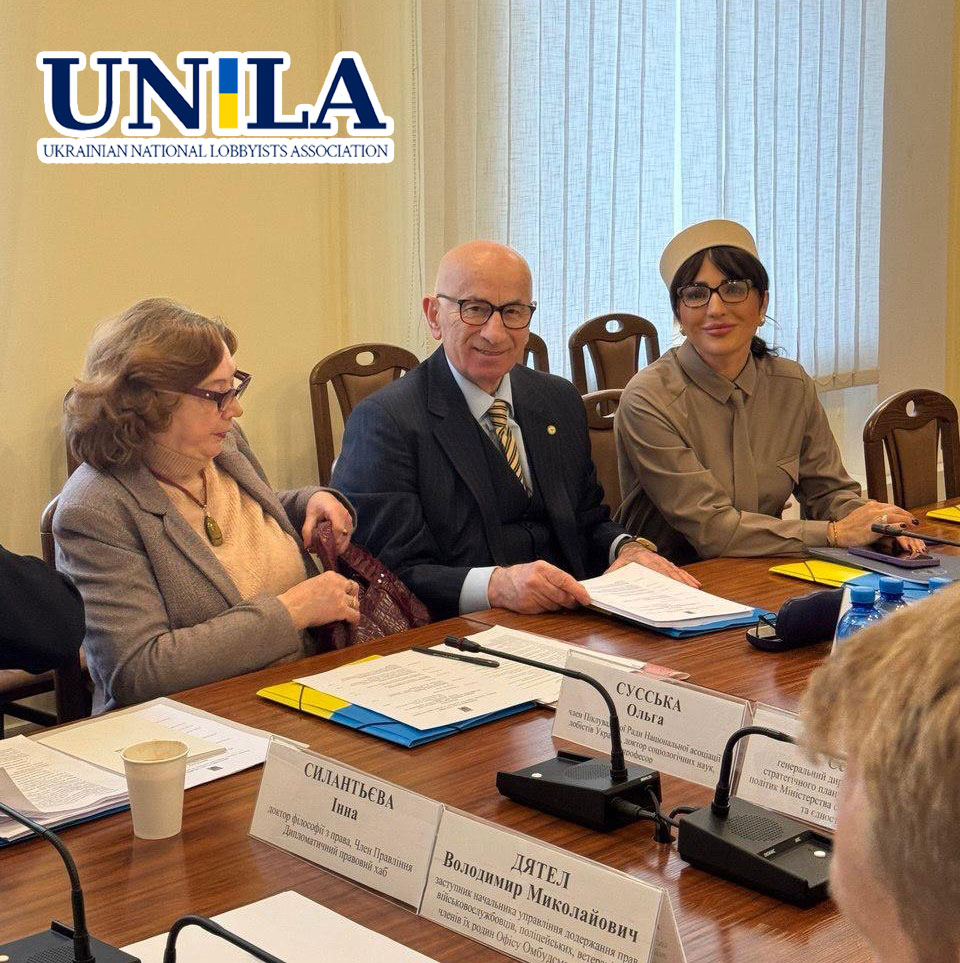
Representatives of the Ukrainian National Lobbyists Association joined the expert discussion and initiated a thorough scientific and legal analysis of the project. In particular, the members of the Board of Trustees of the National Association of Lobbyists of Ukraine joined the discussion and further work: Vasyl Kostytskyi, Doctor of Law, Professor, Honored Lawyer of Ukraine, Academician; Olga Susska, Doctor of Sociology, Professor; Liudmyla Kozhura, Doctor of Law, Professor, Director of the Law Institute; Serhii Lysenko, Doctor of Law, Doctor of Public Administration, Professor, combatant; Nataliia Kaminska, Doctor of Law, Professor; Yaroslav Melnyk, Doctor of Law; Serhii Petkov, Doctor of Law, Professor, Lieutenant Colonel.
The discussion focuses on the appropriateness of the codification form of the act, its subject matter and correlation with the current system of legislation.
As Vasyl Kostytskyi emphasized:
“The need for codification is obvious, because the scope of social relations related to granting veteran status, guarantees, social services, employment, retraining, medical and psychological adaptation is extremely broad.”
At the same time, he drew attention to the conceptual shortcomings of the current version of the draft:
“We still don’t know who the authors of this draft are. Legislation should be systematic, and a special law should clearly define the subject of regulation. The issue of protecting statehood is one plane, the status of defenders is another. Their mechanical combination requires a serious methodological justification.”
Yaroslav Melnyk emphasized the theoretical and legal aspects: “The proposed Code contains methodological gaps in terms of legal theory, as there is no systematic approach to the completeness of the law-relative mechanism.” In his opinion, a number of provisions of the draft law do not meet the requirements of legislative technique and the Law of Ukraine “On Lawmaking”, and transitional provisions do not form a coherent model for transforming the current body of norms.
At the same time, the expert recognized the potential of the initiative: “Codification is possible in the format of the Fundamentals of Legislation on Defenders of the State of Ukraine, which will ensure the fundamental and systematic development of veteran policy.”
A separate block of discussion concerned the mechanism of legal liability for violations of the rights of defense counsel. Serhiy Petkov proposed to abandon the blanket formula “liability under the current legislation” and to include its own procedural tools in the Code.
“Officials and employees must bear personal legal responsibility for violations of the rights of defense counsels. Such liability arises for failure to comply with the direct provisions of the Code and does not require additional reference to the Code of Administrative Offenses,” said Serhiy Petkov.
Among the proposed innovations are the classification of offenses (procedural, material, informational, discriminatory), the introduction of administrative fines in increased amounts with the transfer of funds to the trust fund for social support of veterans, the possibility of temporary suspension of officials and the conduct of proceedings under the rules of the Law of Ukraine “On Administrative Procedure”.
“The burden of proof of the absence of a violation should be on the official. This will modernize the process and create a real preventive effect,” emphasized Petkov.
Representing the position of the executive authorities, Sergiy Kucherenko emphasized the importance of unifying terminology and taking into account the developments of the scientific community: “Each term has a certain meaning. If we use it in the Code, then all of Ukraine should equally understand what it means.”
He also emphasized the need for institutional cooperation between the Ministry of Defense and the bodies responsible for veterans’ policy to avoid reducing the level of social guarantees already provided in the event of a possible transformation of legislation.
It is expected that the roundtable will result in consolidated proposals for a draft legal act, define its conceptual model, and outline methodological principles for further work. The key task remains the creation of a systematic, internally coordinated and effective legal mechanism that will ensure real protection of the rights of persons who have defended or are defending the statehood of Ukraine, rather than declarative.