
Lobbying in Local Government: Implementation Challenges and Risks to Public Governance
Author: Volodymyr Bondarenko — civil servant, secretary of the Kyiv City Council (9th convocation), former advisor and deputy mayor of Kyiv.
Following the entry into force of the Law of Ukraine “On Lobbying,” one of the most challenging areas of its practical application has been the activities of local self-government bodies. Despite the legislative establishment of this new institution, a significant number of questions regarding the definition of the object, subject, and parties involved in lobbying, as well as the distinction between commercial and public interests, remain unresolved.
In the academic article “Lobbying in Local Self-Government: Implementation Challenges and Risks for Public Governance,” Volodymyr Bondarenko analyzes the legislative conflicts that have arisen following the enactment of the Law of Ukraine “On Lobbying” and assesses their impact on the practices of local self-government bodies.
The author points out that the vagueness of certain provisions of the law creates conditions for ambiguous interpretations of lobbying activities, the development of covert (“shadow”) lobbying practices, and the emergence of corruption risks during the adoption of administrative decisions.
Legislative Conflicts as One of the Main Challenges Facing the New Institution
One of the key findings of the study is the existence of internal contradictions between the Law of Ukraine “On Lobbying” and the Law of Ukraine “On Lawmaking.”
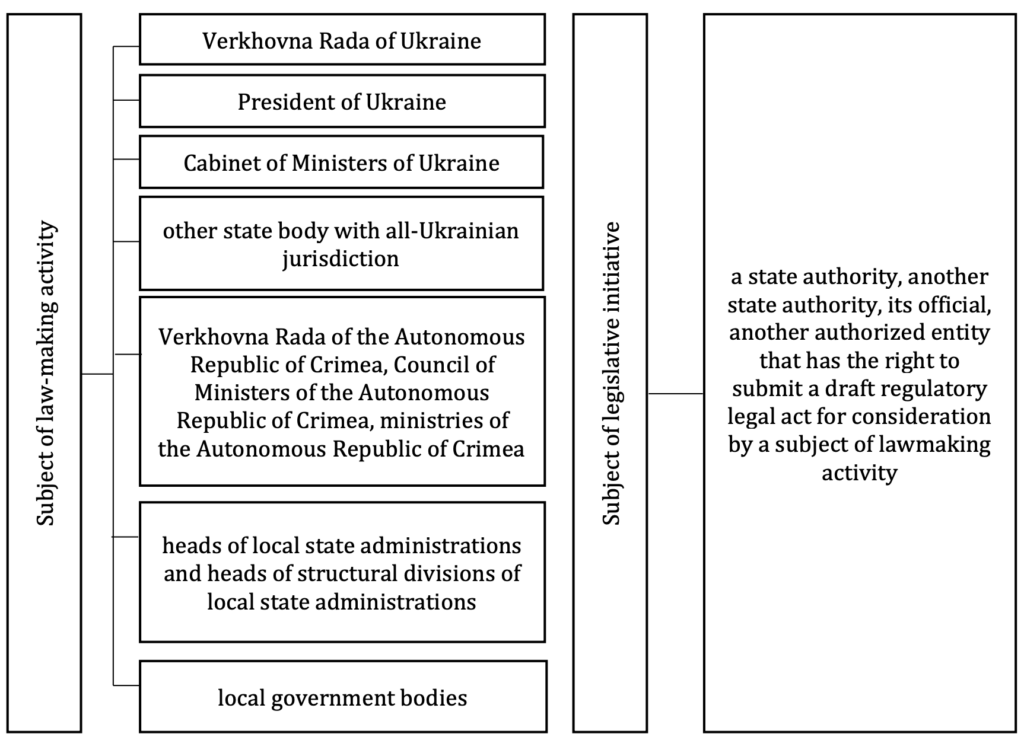
The Law on Lobbying defines the subject of lobbying through the concepts of a “law-making entity” and a “body with the right to initiate legislation.” At the same time, the Law “On Law-Making Activity,” to which reference is made, had not yet entered into force as of the time of this study. It is precisely this, in the author’s opinion, that creates a situation of legal uncertainty.
In fact, the legislature uses concepts that cannot yet be fully applied in practice. This leads to difficulties in defining the very object of lobbying, as well as in the practical application of certain provisions of the special law.
Subject of lobbying: Does the law cover all management decisions?
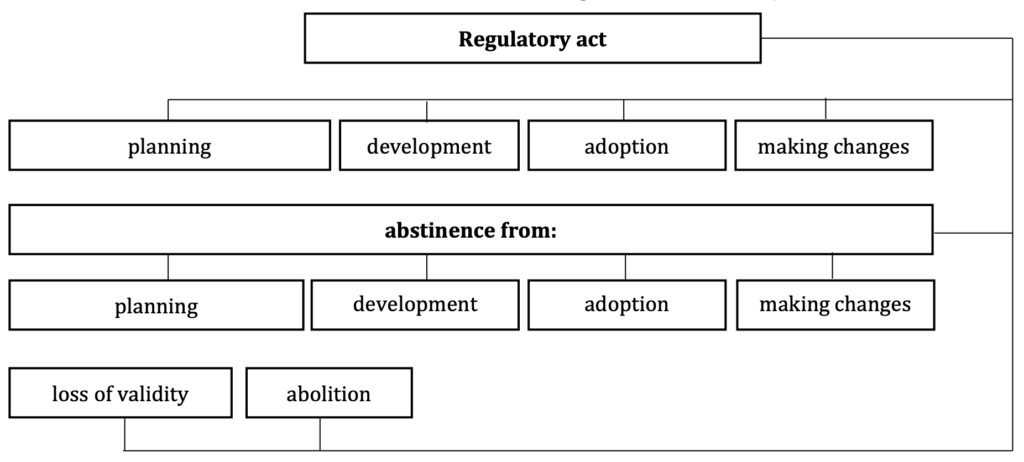
The next section of the study is devoted to defining the subject matter of lobbying. The author notes that the current Law of Ukraine “On Lobbying” links the subject matter of lobbying primarily to regulatory acts and actions related to their planning, drafting, adoption, amendment, expiration, or repeal. It is precisely around this framework that the modern model of legal regulation of lobbying activities is built.
At the same time, the practice of local self-government bodies shows that a significant number of decisions that actually affect the rights, obligations, or economic interests of specific individuals are adopted not in the form of normative legal acts, but as acts of individual application.
It is precisely this, in the author’s view, that gives rise to one of the key problems with the current legislation. If influence is exerted with regard to a decision that does not have the characteristics of a normative legal act, the question arises: does the Law of Ukraine “On Lobbying” apply to such actions?
Volodymyr Bondarenko cites examples from the practice of local self-government and the activities of the Cabinet of Ministers of Ukraine that demonstrate that certain decisions may in fact concern a specific business entity, even though they are formally issued as regulatory acts or pilot projects. This points to the need for a clearer definition of the subject of lobbying and for taking into account the actual mechanisms of influence on the administrative decision-making process.
The author notes that international practice also demonstrates a broader approach to defining the subject matter of lobbying. In light of this, it would be advisable to further discuss the possibility of extending legislative regulation to specific acts of individual application, if they are the subject of interest representation.
Local Self-Government Practices and the Risks of Covert Lobbying
The author pays particular attention to situations in which the actual representation of private interests is carried out under the guise of protecting the public interest.
The study notes that local governments regularly encounter such cases. As an example, the study cites an analysis of electronic petitions submitted to the Kyiv City Council, which, according to the author, indicates the existence of covert lobbying practices in which private or corporate interests are disguised as initiatives of public importance.
It is precisely such situations that demonstrate that the formal criteria set forth in current legislation are not always sufficient for a proper legal assessment of specific mechanisms for influencing public authorities. Therefore, the issue of the subject matter of lobbying is directly linked to the need to further improve legislation and establish a uniform approach to law enforcement.
Commercial and Public Interest: One of the Key Issues in the New Legislation
The distinction between commercial and public interests is central to Volodymyr Bondarenko’s study. According to the author, it is precisely this criterion that currently defines the scope of application of the Law of Ukraine “On Lobbying” and, at the same time, gives rise to the greatest number of practical problems.
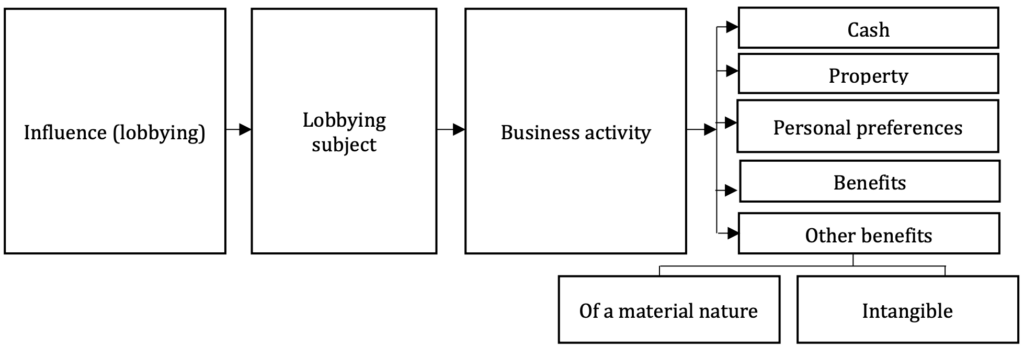
The author notes that the legislature links lobbying to the protection of commercial interests arising from economic activity. At the same time, even the broad interpretation of “commercial interest” proposed by the National Agency for the Prevention of Corruption is still based on its connection specifically to commercial activities. Combined with the limited scope of lobbying, this significantly narrows the scope of application of the special law.
To illustrate this issue, the author draws on international practices and examples from the Ukrainian business sector. In particular, the author notes that the implementation of social, charitable, or environmental projects can simultaneously have a societal impact and positively influence a company’s business reputation, brand promotion, or financial performance. Under such circumstances, it is difficult to draw a clear line between social and commercial interests.
In the author’s view, it is precisely this structure of the legislation that creates a significant “gray area” in legal regulation. Certain forms of influence on local self-government bodies may in fact serve private or corporate interests, yet formally do not meet the legal definition of lobbying.
Advocacy and Lobbying: Where Is the Line?
Another important aspect of the study is distinguishing between advocacy and lobbying.
The author notes that, in practice, these concepts are often conflated, even though their legal nature differs. According to Volodymyr Bondarenko, the main criterion for this distinction should not be the group of entities or the fact of engaging in economic activity, but rather the nature of the interest being protected.
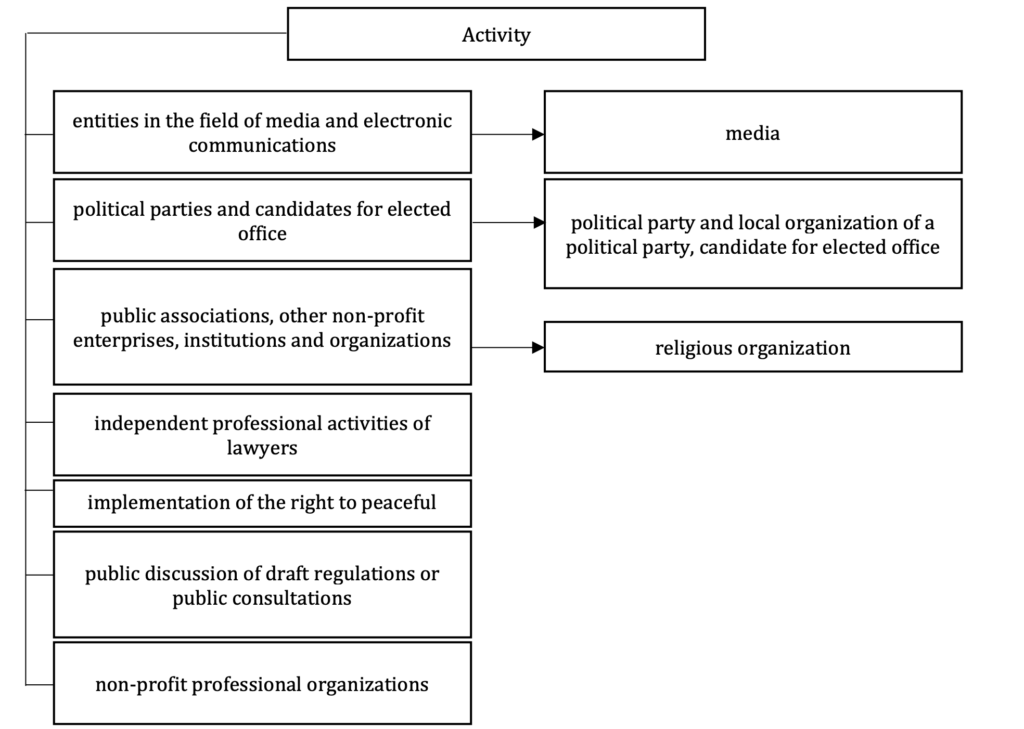
As the article notes, the public interest is general and impersonal in nature and is aimed at meeting the needs of an undefined group of people. Lobbying, on the other hand, involves representing a specific private or commercial interest. It is precisely this characteristic, according to the author, that can serve as the fundamental criterion for legally distinguishing advocacy from lobbying.
At the same time, the author points out that in the practice of local self-government, situations often arise in which commercial interests are disguised as public interests. In particular, this can occur through mechanisms such as electronic petitions, information campaigns, or support for specific municipal decisions. Such cases require special attention from both the legislature and law enforcement agencies.
The Author’s Conclusions
In summarizing his research, Volodymyr Bondarenko concludes that the further development of lobbying legislation should be carried out in a comprehensive manner. Among the main areas for improvement, the author cites the harmonization of regulatory acts, the clarification of terminology, a review of approaches to defining the subject of lobbying, distinguishing between commercial and public interests, and taking into account modern forms of indirect influence on the decision-making process by local government bodies.
In the author’s view, only by resolving existing legislative conflicts can we ensure the transparent functioning of the lobbying system, proper oversight of interest representation, and minimize corruption risks in the activities of local self-government bodies.
About the Author
Volodymyr Bondarenko — a civil servant, secretary of the Kyiv City Council of the 9th convocation, and former advisor and deputy mayor of Kyiv.
The full text of the research article “Lobbying in Local Self-Government: Implementation Challenges and Risks for Public Governance” was published in the academic journal “Public Administration and Policy”, No. 5 (21), 2026.