Vitaliia Nesterenko on the New Culture of Lobbying in Ukraine
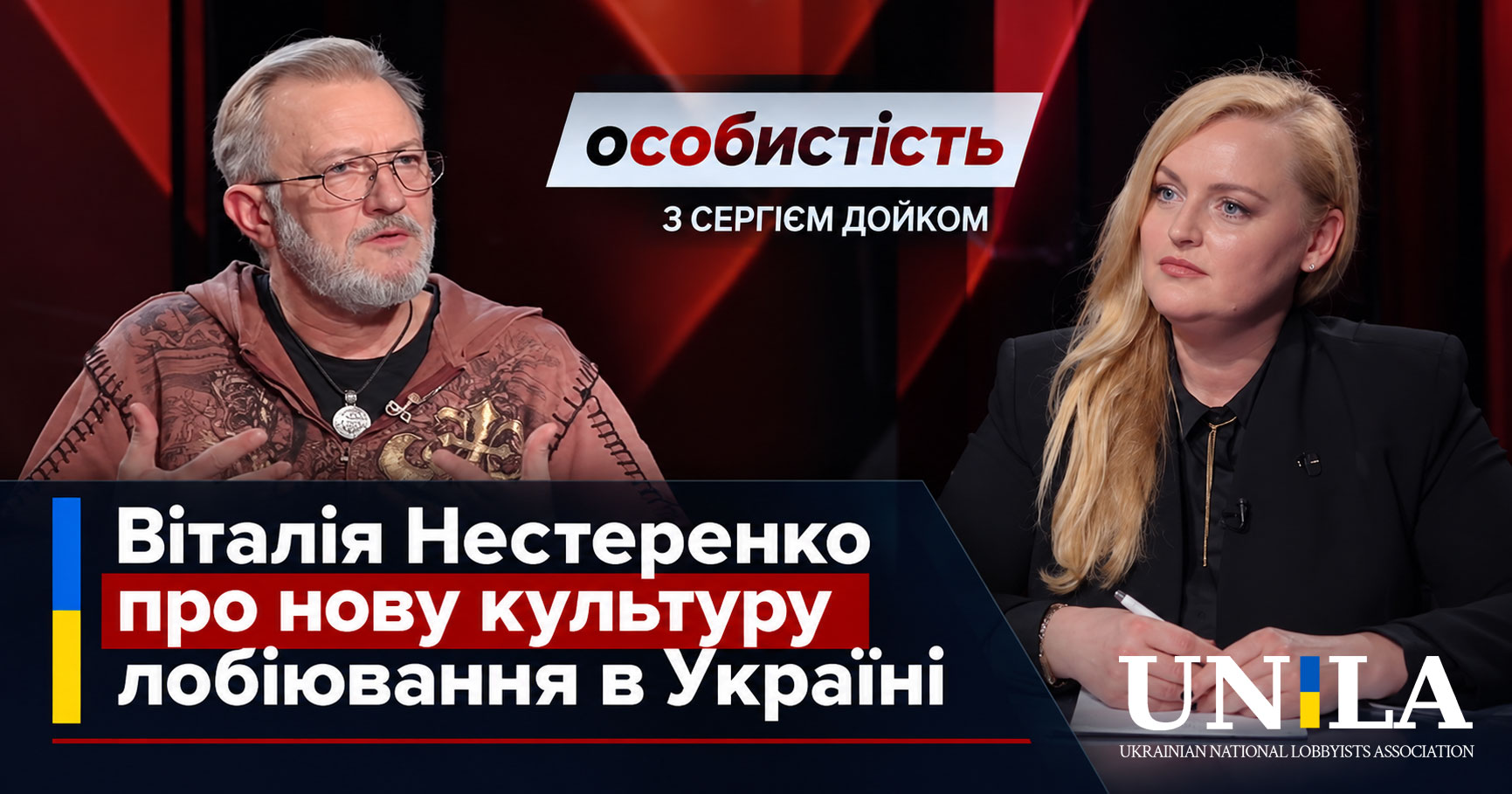
Can lobbying be honest, transparent, and beneficial to society? This is exactly what Vitalia Nesterenko, executive director of the Ukrainian National Lobbyists Association, discussed on the program “Personality with Serhii Doiko.”
The discussion about the UNLA’s first year of operation quickly went beyond the scope of a typical report. The focus turned to a topic that still provokes considerable prejudice in Ukraine: where does legitimate advocacy end and behind-the-scenes influence begin?
In society, the word “lobbying” is often associated with secret deals and corruption. However, civilized lobbying is of a different nature—it involves transparent and accountable representation of interests during the government decision-making process. Ukraine’s Law “On Lobbying” laid the legal foundation for this activity, but real change begins with a new professional culture.
Vitaliia Nesterenko emphasized that society must understand who represents a particular interest, to whom, and on what grounds.
A lobbyist is not a “shadowy intermediary,” but a professional who must possess legal knowledge, analytical thinking, a commitment to ethics, and the ability to engage in reasoned dialogue between business, government, and society.
During its first year, UNLA established a professional infrastructure: expert bodies, working groups, an educational platform, and regional chapters. Among its practical achievements are a model contract for lobbying services, a “Roadmap for Interaction Between Lobbyists and Members of the Ukrainian Parliament,” and recommendations for working with local government bodies.
Another area of focus is education. The association founded the Higher School of Lobbying, developed a 90-hour curriculum, and is working on professional standards for lobbyists and government relations specialists.
After all, it is not enough to legalize a profession—it is necessary to define its competencies, ethical boundaries, and responsibilities.
UNLA is also developing a regional network and international contacts, drawing on European and American experience to shape its own Ukrainian model. The goal is not to copy other countries’ rules, but to create a system that complies with national legislation and meets public expectations.
The main conclusion is simple: lobbying ceases to be a shadowy activity when it becomes professional, lawful, and accountable. It is transparency that transforms influence over the government from a source of suspicion into a civilized tool for representing interests.