Vladyslav Hrytseniuk on Ukraine’s New Lobbying Law, Transparency, Education, and Professional Standards
By Scott Douglas Jacobsen
Independent Journalist and Diplomatic Legal Hub Coordinator
How is Ukraine developing transparent lobbying through regulation, professional education, certification, regional representation, and safeguards against corruption?
Biography and Interview Overview
Vladyslav Hrytseniuk is a Ukrainian lawyer, advocate, educator, and lobbying professional based in Odesa with a PhD in Law. He is involved with the National Association of Lobbyists of Ukraine and promotes transparent, regulated lobbying. His work also includes legal education, professional standards, regional advocacy, and the development of Ukraine’s emerging lobbying framework and institutions.
In this interview, Scott Douglas Jacobsen and Vladyslav Hrytseniuk discuss Ukraine’s new lobbying regime, public misconceptions linking lobbying with corruption, professional standards, education and certification, regional development in Odesa, taxation and regulation, and the role of transparent lobbying in strengthening Ukraine’s legal and institutional system during wartime and reconstruction efforts.
Joining the National Association of Lobbyists of Ukraine
Scott Douglas Jacobsen: How did you become involved in the National Association of Lobbyists of Ukraine?
Vladyslav Hrytseniuk: I am a lawyer and advocate. I regularly follow developments in Ukrainian legislation. I became interested in the Law of Ukraine “On Lobbying,” which had been adopted by the Verkhovna Rada in February 2024 and entered into force on 1 September 2025, together with the launch of the NACP Transparency Register.
After that, I searched online and learned about the National Association of Lobbyists of Ukraine in Kyiv. I asked my colleague to contact the association.
I was very pleased and surprised to receive a response so quickly. I sent them my CV and explained that it was important for me to become involved in the association and to be among the professionals helping to develop this new field in Ukraine. I was then invited to Kyiv, where I met Oleksii Shevchuk for the first time.
We had a very good conversation. He is also a lawyer, and it was encouraging for me to see that, even during the war, we can think seriously about developing and modernizing Ukraine’s legal system.
Legal Boundaries, Transparency, and Professional Standards
Jacobsen: Lobbying has to operate within clear rules. In the Ukrainian legal context, what are some of the most important boundaries that have already been established? What additional safeguards or boundaries do you think should be developed?
Hrytseniuk: In Ukraine, my friends and clients often ask me, “What is lobbying?”
For many years, people in Ukraine have sometimes associated lobbying with corruption. They may imagine it as knowing someone in government, calling that person, asking them to resolve a problem, and offering money or another benefit in return. But professional lobbying, as regulated under Ukrainian law, is not the same as corruption.
The new legal framework treats lobbying as a regulated and transparent form of influence on the development and adoption of legislation and other regulatory acts in commercial interests. It establishes clear rules on who may engage in lobbying, how lobbying activities should be conducted, and how they should be disclosed through the Transparency Register.
It is a professional system and a legitimate way of representing interests.
That is why people sometimes think of lobbying as corruption. We now have a legal framework, but the Law on Lobbying is still very new. I want to be among the professionals helping to improve it as practice develops. The law came into effect on September 1, 2025, together with the NACP Transparency Register, which created a formal system for registering and reporting lobbying activity.
One issue concerns who may become a lobbyist. Ukrainian law allows both individuals and legal entities to acquire the status of a lobbying entity, subject to statutory restrictions. It does not impose a general requirement for a particular educational qualification.
I think this deserves further discussion because lobbying can involve technically complex areas of law and public policy. For example, someone seeking to influence energy legislation should understand the legal and practical consequences of the proposed changes. A poorly designed amendment can have effects far beyond the provision being changed. That is why I think the law may eventually require further refinement.
At the moment, one of the issues we are actively discussing is the taxation and professional status of lobbyists in Ukraine. Together with colleagues, we are considering how lobbying should fit into the existing regulatory and tax framework, including whether an individual lobbyist could operate under a professional model comparable, in certain respects, to other independent professional activities in Ukraine. These are issues that still require discussion with the relevant public authorities.
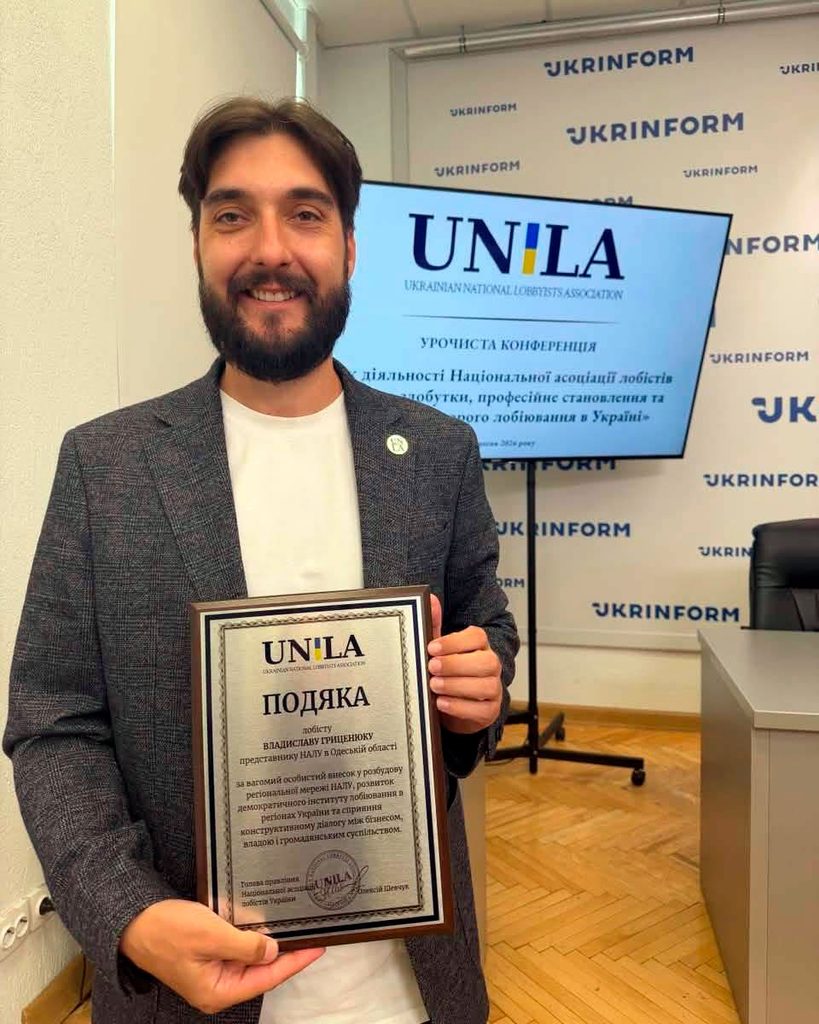
This is a new profession in Ukraine, and we are helping to shape its rules. I hope we create a system that will remain workable for many years. When preparing legal opinions and proposals, I have also studied European and United States approaches to lobbying and considered which elements could be useful in the Ukrainian context.
Odesa’s Regional Role and Lobbying Education
Jacobsen: Where do you see Odesa’s position within the UNLA in making appropriate changes and creating a positive impact through lobbying, both for those seeking legitimate representation and in establishing guardrails against overreach or improper lobbying?
Hrytseniuk: Odesa is a very important region. Lobbying should not develop only in the capital, Kyiv. We also need strong professional work in the regions.
The Odesa region is particularly important to Ukraine because of its ports, logistics, agriculture, international trade, investment, and business activity. The UNLA formally established its Odesa regional branch in 2026, with the stated aim of supporting transparent lobbying, dialogue with government and local authorities, and representation of regional interests at the national level.
There are also many businesses, international organizations, and foreign representatives connected with the region. For that reason, we decided to sign a memorandum.
For example, we cooperate with the Chamber of Commerce and Industry in Odesa, which represents the interests of many businesses in the region. We also work with universities.
I teach students at an agricultural university, across five disciplines, and I decided to introduce them to the law on lobbying as well. There is a major educational component to this work because, as I mentioned, many people still think lobbying is either unsuitable for Ukraine or simply another form of corruption. Part of my mission is to explain that professional lobbying, when conducted within the legal framework, is different from corruption.
I would like to see a stronger educational system for lobbying develop in Ukraine. Perhaps, in the near future, there could be a dedicated school, institute, or other institutional framework for educating students and professionals in this field. UNLA has already begun developing educational infrastructure, including the Higher School of Lobbying and specialized training programs.
Certification and Continuing Professional Education
Jacobsen: So, for lobbying, there could eventually be a formal qualification or certification process. An earlier version of that could be provided through UNLA courses. Someone could complete a course, pass the required assessment, and receive a certificate.
Hrytseniuk: Yes, I understand. I think UNLA could develop something comparable to the continuing professional education system used in the legal profession. Ukrainian advocates already have an established system of professional-development courses, certificates, and continuing education administered through institutions including the Higher School of Advocacy. The system also uses professional-development credits for accredited activities.
I think lobbyists could develop something similar. We need certification and continuing education because, to understand an area deeply and broadly, you need both practical experience and a structured system for maintaining professional knowledge.
The lobbying profession in Ukraine is still developing under the Law on Lobbying, which entered into force on September 1, 2025. Building professional standards alongside the statutory framework could help establish lobbying as a distinct and accountable profession.
Jacobsen: Thank you very much for the opportunity and your time, Vladyslav.