UNLA and the expert community are joining forces to improve policies aimed at countering the use of cryptoassets to circumvent sanctions
The Ukrainian National Lobbyists Association (UNLA) has joined efforts to identify areas for joint expert work aimed at countering the circumvention of sanctions through cryptoassets. The discussion focused on drafting well-founded legislative proposals, developing international cooperation, and utilizing research findings to strengthen Ukraine’s financial security.
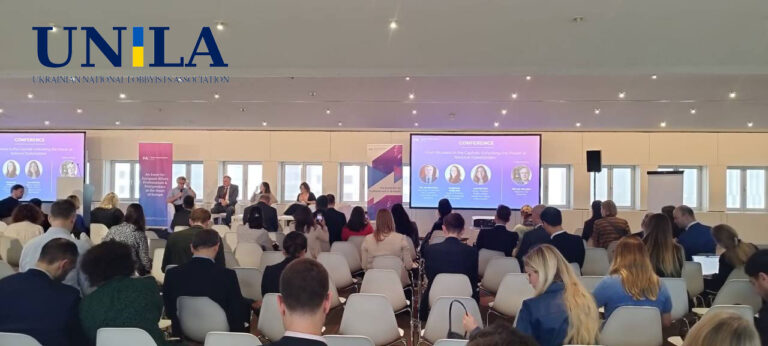
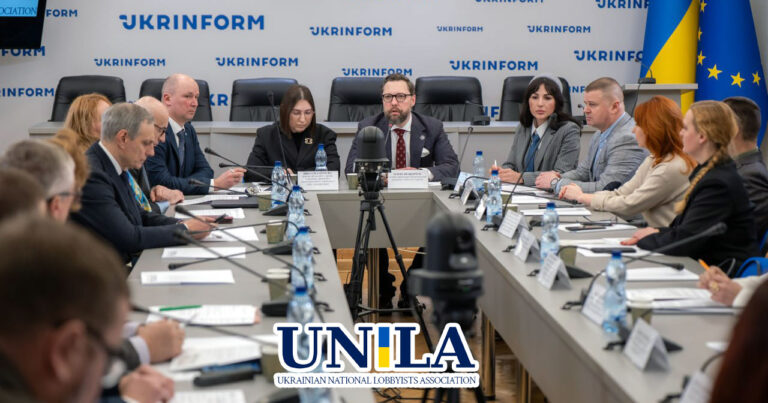
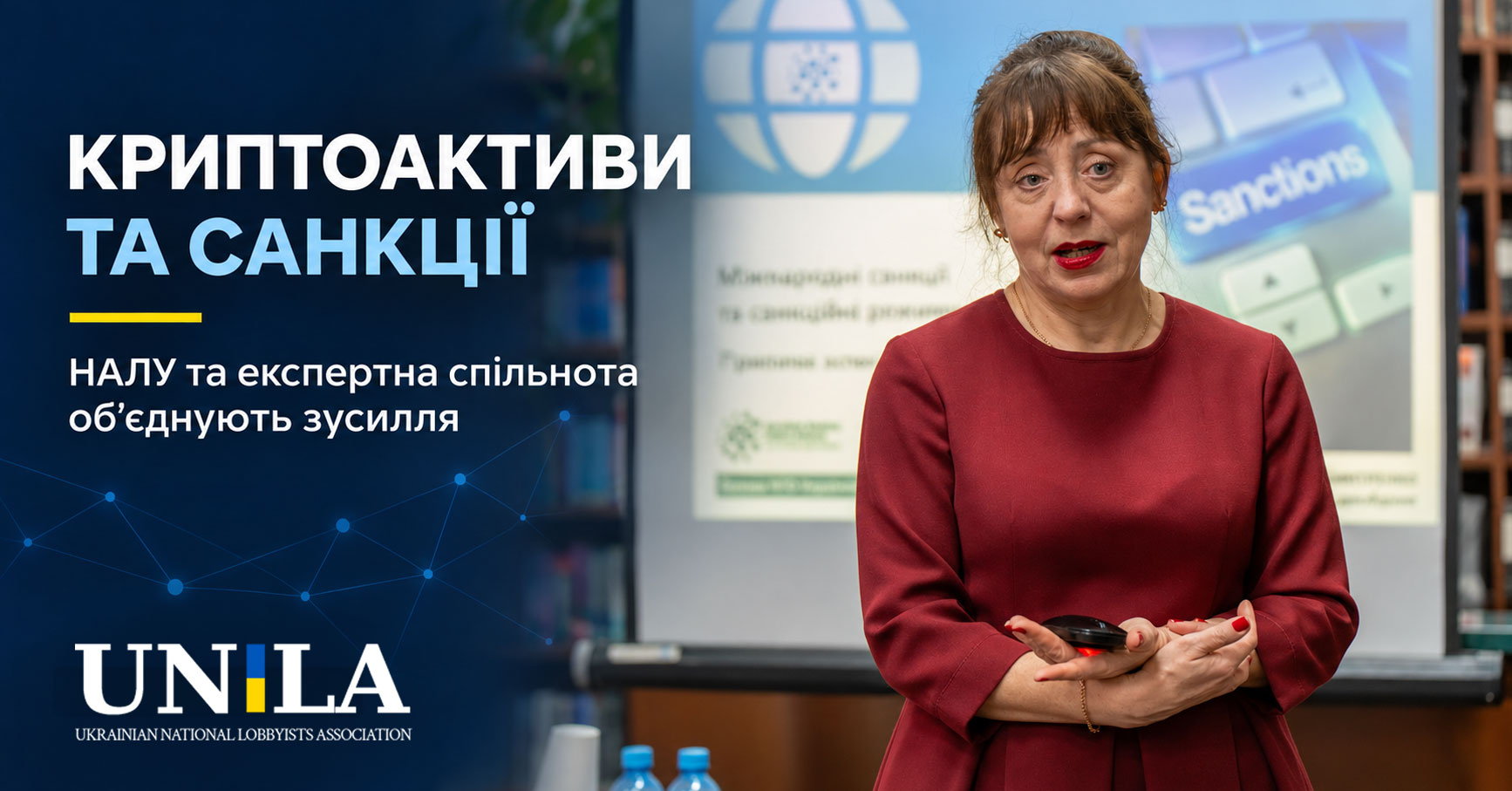
These issues were discussed on November 18, 2026, during the expert event “Cryptoassets Under Sanctions: Challenges for the World and Ukraine,” which took place at the Scientific Library of the National University of Kyiv-Mohyla Academy.
UNLA co-organized the event together with the nonprofit organization “Ukrainian Modern Digital Science” (UMDS) and the Scientific Library of NaUKMA. The Association’s participation in the discussion focused on a practical question: how to combine research expertise and professional advocacy in dialogue with government authorities to help improve sanctions policy.

Sanctions Policy in the Context of the Development of Digital Finance
The keynote presentation was delivered by Tetiana Dmytrenko—Doctor of Economics, senior researcher, chair of the board of the nonprofit organization “Ukrainian Modern Digital Science,” and an expert on anti-money laundering and cryptoasset regulation.
Oksana Ignatenko, executive director of the Ukrainian Center for Financial Integrity (CFI) and an expert in combating financial crime with research experience at the RUSI Center for Finance and Security, joined the discussion. Representatives of the UNLA and invited experts also participated in the discussion.
Tetyana Dmytrenko presented general approaches to studying mechanisms for circumventing sanctions in the digital financial environment. She discussed the risks associated with the use of cryptoassets, the activities of financial intermediaries, and cross-border payment mechanisms that can complicate the enforcement of restrictive measures.
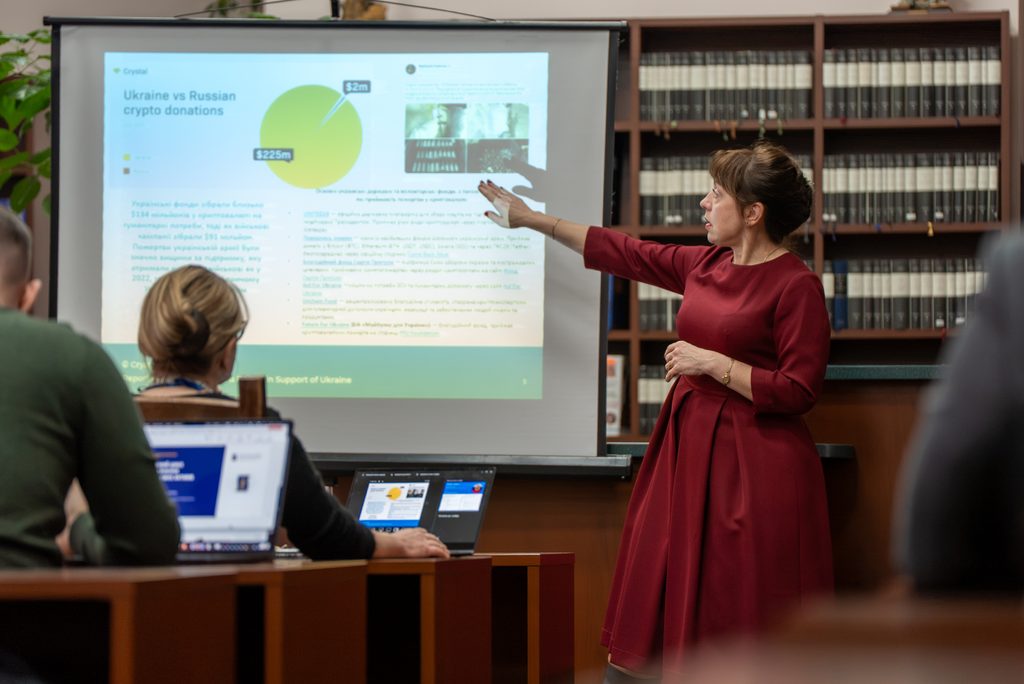
Special attention was paid to the interaction between the Ukrainian sanctions system and the approaches of international partners. Coordinating the relevant measures requires proper legal formalization, justification of sanctions proposals, and subsequent monitoring of the implementation of the decisions adopted.
Research as the Basis for Practical Legal Decisions
One of the central topics of the event was the use of research findings to improve legislation and its implementation.
The presented materials examined the combination of sanctions control, financial monitoring, open-source analysis, and blockchain analytics. These tools help establish links between participants in financial transactions, identify risks, and prepare materials for review by the competent authorities.
At the same time, the effectiveness of such work depends on the quality of the legal analysis. Identified indicators of high-risk transactions require verification, and proposed responses must take into account the legal basis, the authority of the relevant agencies, and the rights of market participants.

The practical part of the discussion covered issues related to identifying associated persons and controlled assets, monitoring compliance with restrictions, and evaluating the effectiveness of sanctions policy. The need to train specialists capable of working with digital financial instruments was also raised.
The Role of UNLA in Preparing and Submitting Expert Proposals
The participation of the professional lobbying community provided an opportunity to discuss further work on public policy proposals and their submission to the relevant authorities.
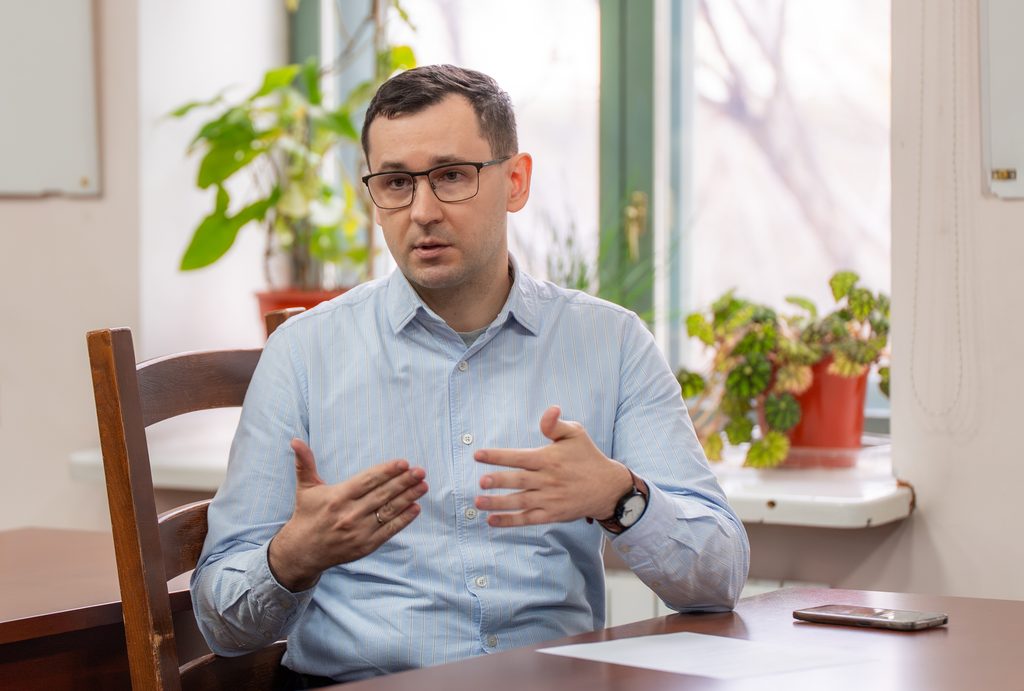
UNLA can help systematize expert findings, prepare well-founded proposals for legislative changes, and foster professional dialogue among researchers, practitioners, and government officials. Such collaboration creates the conditions for a systematic approach to addressing the issues identified during the event.
A separate topic of discussion was the transparency of funding sources for political parties, political advertising, and activities aimed at influencing public decisions. In this context, the risks of covert foreign funding and ways to improve mechanisms for detecting it were examined.

The development of such initiatives requires consideration of the public interest, transparency requirements, and a clear distinction between legitimate professional activities and undue influence.
International Cooperation and Exchange of Expertise
The event’s program included a discussion of opportunities for collaboration between UMDS, the Center for Financial Integrity, and the international research community.
The main topics of discussion were the exchange of experiences in assessing sanctions risks, the development of practical recommendations, and the advancement of educational initiatives. International expertise can help address the cross-border nature of cryptoasset transactions and adapt relevant approaches to the Ukrainian legal environment.

For future work, it is essential to combine research findings with the expertise of professionals working in the fields of sanctions compliance, financial monitoring, and legal support.
Joint Areas for Future Work
At the conclusion of the event, the representatives of the expert community in attendance unanimously agreed on the need to collaborate in order to develop and facilitate the implementation of proposals in the areas outlined by the program.
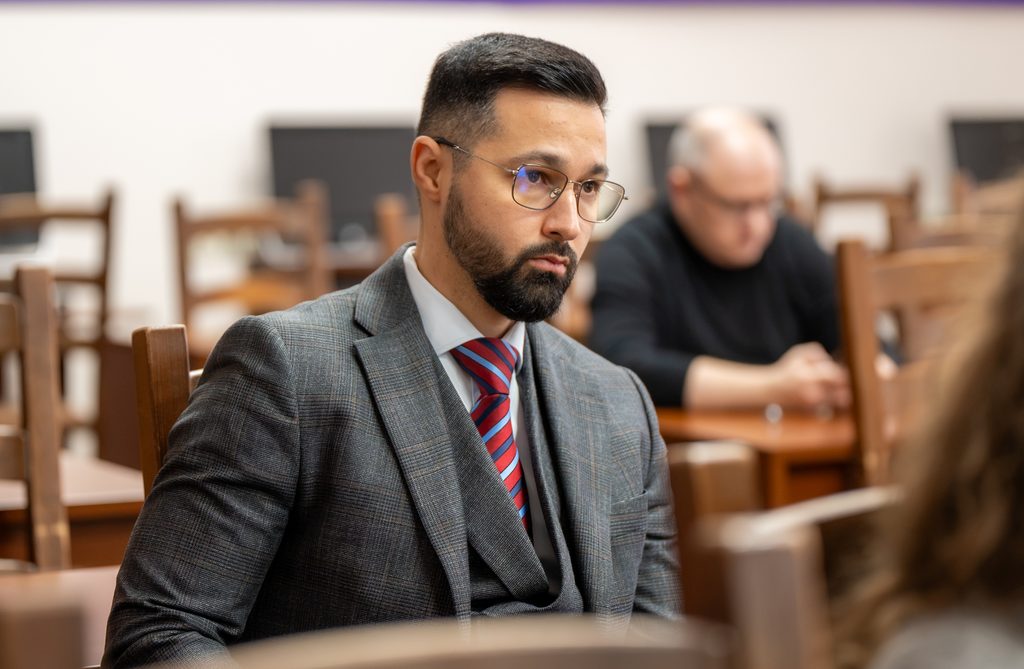
Future collaboration will include:
- a summary of expert recommendations on improving sanctions policy in the field of cryptoassets;
- the preparation of legal recommendations and proposals for legislative changes;
- the development of joint research and educational activities;
- exchanging expertise with Ukrainian and international partners;
- advocacy support for the proposals developed and their submission to the relevant authorities.
The combination of UMDS’s research expertise, the experience of financial integrity specialists, and the capabilities of the UNLA professional community creates a foundation for further collaboration. Its practical goal is to facilitate the development of legally sound decisions that will enhance the effectiveness of sanctions policy, limit the ability to finance aggression, and strengthen Ukraine’s financial security.