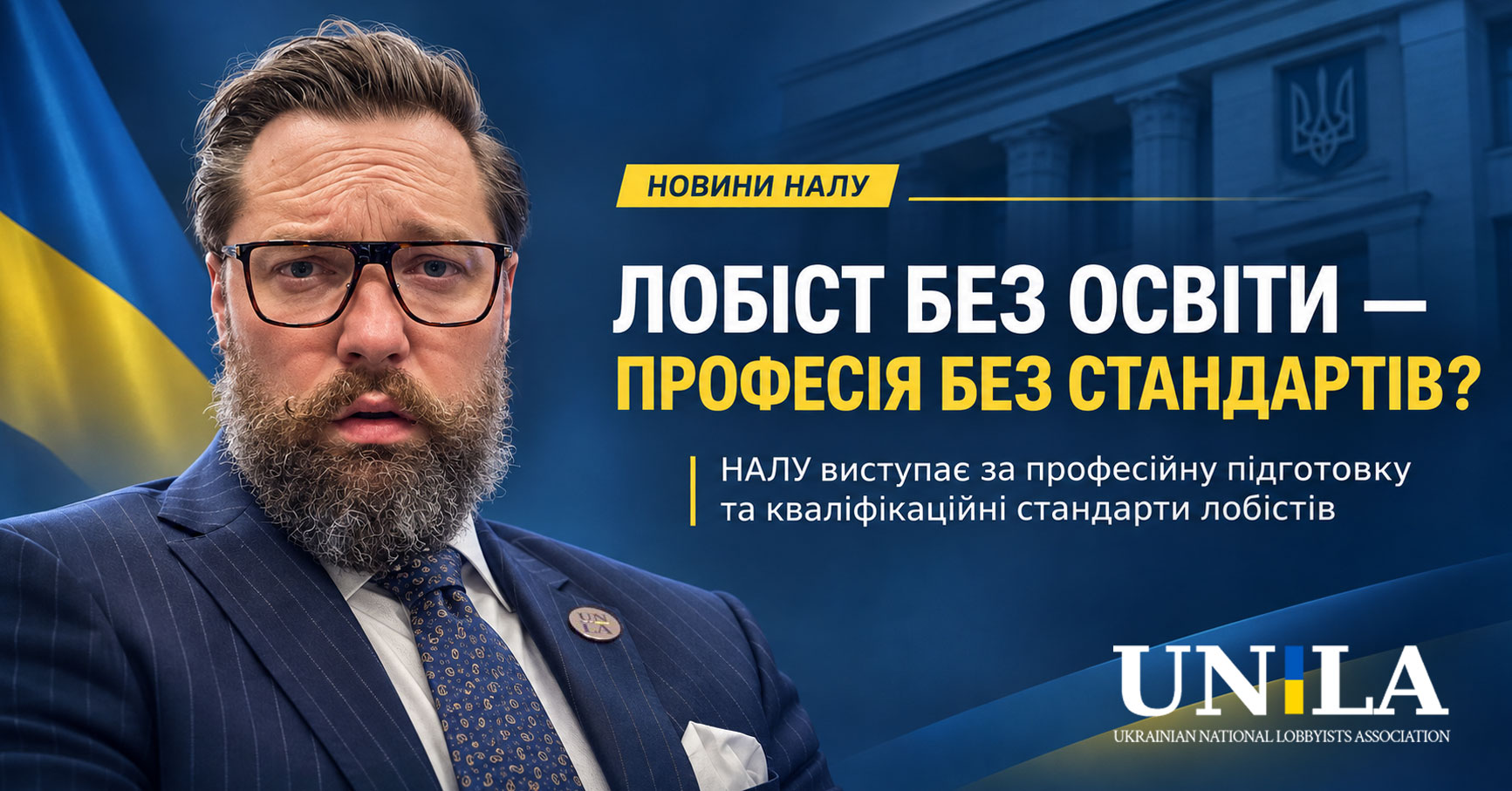
Oleksiy Shevchuk: Lobbying in Ukraine should become a fully-fledged profession with clear standards for education and qualifications
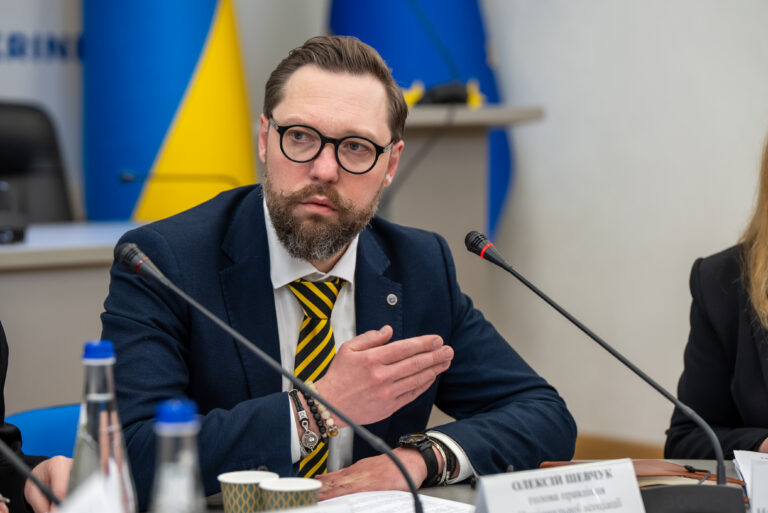
The Ukrainian National Lobbyists Association (UNLA) advocates for the introduction of mandatory qualification requirements for the professional activities of lobbyists, the development of specialized education, and the legislative establishment of professional standards. Oleksiy Shevchuk, chairman of the UNLA board, emphasized the need for systemic changes while commenting on the prospects for the development of the lobbying profession in Ukraine.
According to Oleksiy Shevchuk, one of the fundamental shortcomings of the current legislation on lobbying remains the lack of mandatory requirements regarding professional education and qualifications for individuals engaged in such activities.
“We have established a legal framework for lobbying, but we have not yet determined who, in terms of professional competence, is qualified to be called a lobbyist,” emphasized the chairman of the UNLA board.
A professional lobbyist is not a middleman, but a qualified specialist
According to Oleksiy Shevchuk, a modern lobbyist must possess comprehensive knowledge in the fields of public administration, law, economics, the legislative process, and regulatory policy.
At the same time, professional competence must be tailored to the specific nature of the industry that the specialist represents. In particular, lobbying in the healthcare sector requires an understanding of how the healthcare system works; in education, an understanding of education policy; and in the energy sector, an understanding of the energy market and its regulatory framework.
That is precisely why UNLA supports the development of a two-part model for the professional training of lobbyists.
The first component is a foundational education in a specific field. This refers to a degree in law, economics, medicine, education, engineering, or another field relevant to one’s professional activity.
The second component is specialized training in lobbying. It should cover government relations (GR) tools, regulatory activities, advocacy, compliance, anti-corruption legislation, professional ethics, and mechanisms for interacting with government agencies.
Oleksiy Shevchuk places special emphasis on the principle of state-centeredness as a fundamental element of professional training.
“Lobbying should not become a mechanism for serving private interests at the expense of the state’s interests,” he emphasized.
In his view, a professional lobbyist must strike a balance between the client’s legitimate interests, public needs, and government priorities.
Local authorities support raising professional standards for lobbying
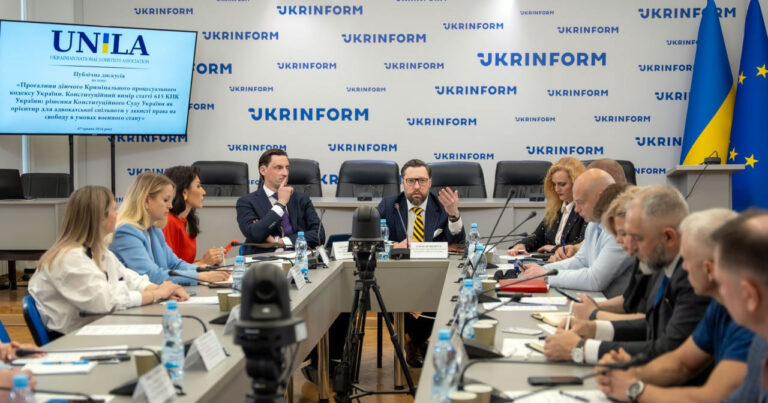
The Ukrainian National Lobbyists Association is already conducting systematic consultations with state and local government authorities regarding the introduction of educational and qualification requirements for lobbyists.
According to the chair of the UNLA board, positive feedback on communication was received from nearly 60% of the administrations and local councils with which the Association worked during the relevant consultations.
In particular, the Volyn Regional Council expressed its support for the initiative after reviewing the UNLA’s proposal to amend Part 1 of Article 10 of the Law of Ukraine “On Lobbying” regarding the requirement for a college degree.
In its response, the regional council described the proposal as a further step toward implementing higher standards for the lobbying industry.
The Kharkiv Regional Council also supported the proposed amendments, noting that such a provision would help raise professional standards, accountability, and transparency in the field of lobbying.
For its part, the Mykolaiv Regional Council recognized the need to establish higher education programs for professional lobbyists, given the complexity and specific nature of the relevant legal relationships. At the same time, the response noted that legislative amendments must be enacted by the Verkhovna Rada of Ukraine in accordance with established procedures.
The Ministry of Internal Affairs’ Position: Promoting Professionalism While Ensuring Access to the Profession
The Ministry of Internal Affairs of Ukraine also considered the issue of improving lobbying legislation.
In its response to the UNLA’s request, the Ministry of Internal Affairs endorsed the need for further development of legislative regulation of lobbying activities based on the principles of legality, transparency, accountability, responsibility, professionalism, and ethics.
At the same time, the Ministry highlighted the need for further expert discussion of the proposed mandatory requirement regarding higher education.
In particular, the Ministry of Internal Affairs noted that this requirement necessitates taking into account the diversity of forms and areas of lobbying activity, particularly in the fields of law, economics, public administration, and communications.
The ministry also expressed its willingness to participate in the drafting of relevant regulatory and legislative acts within the scope of its authority.
Thus, the results of the consultations demonstrate support for raising professional standards in lobbying and, at the same time, the need for a comprehensive approach to the legislative definition of educational and qualification criteria.
UNLA is working on developing a professional standard for “Lobbyists”
The development of vocational education is one of the strategic priorities of the National Association of Lobbyists of Ukraine.
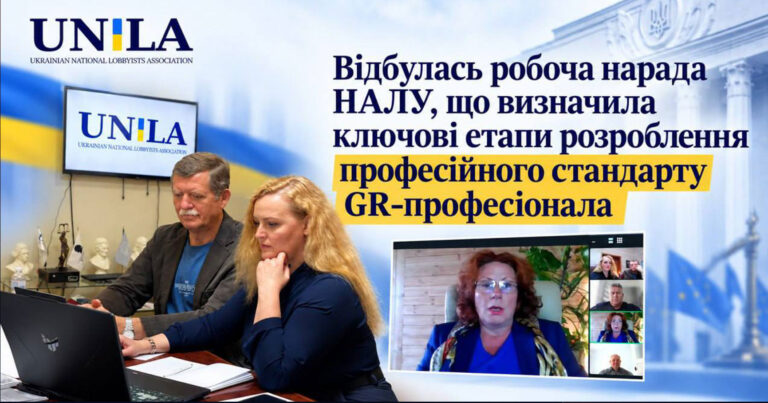
The association has already initiated the development of a professional standard titled “Lobbying Professional (Lobbyist),” aimed at defining the necessary competencies, qualification requirements, professional skills, and ethical standards.
The introduction of appropriate standards should facilitate the transition from the formal registration of lobbying entities to the systematic development of a professional community based on knowledge, accountability, and compliance with the law.
According to Oleksiy Shevchuk, without proper professional criteria, there is a risk that the concept of lobbying will become blurred and conflated with intermediary, consulting, or investment services, which do not always require the necessary expertise to work with regulatory and legal acts.
At the same time, the legal framework governing compulsory education must provide for clear qualification criteria, transparent mechanisms for verifying those qualifications, and non-discriminatory access to the profession.
From Formal Status to Proven Professional Competence
The chairman of the UNLA board is convinced that the development of a civilized lobbying market is impossible without the advancement of professional education and uniform standards of practice.
“Lobbying should become a full-fledged profession, not just a type of registered activity. We must move from the formal status of a lobbyist to a genuine demonstration of their professional competence,” said Oleksiy Shevchuk.
He emphasized that the quality of lobbying should be determined not by access to officials, but by the level of professional training, integrity, responsibility, and the ability to contribute to the adoption of sound public policy decisions.
The Ukrainian National Lobbyists Association will continue to work on developing professional standards, educational programs, and legislative initiatives aimed at establishing a transparent, accountable, and competent lobbying institution in Ukraine.
“Effective lobbying isn’t about having access to officials’ offices. It’s about knowledge, responsibility, professional ethics, and the ability to shape sound government decisions. And professional lobbying in Ukraine begins with education,” concluded Oleksiy Shevchuk.