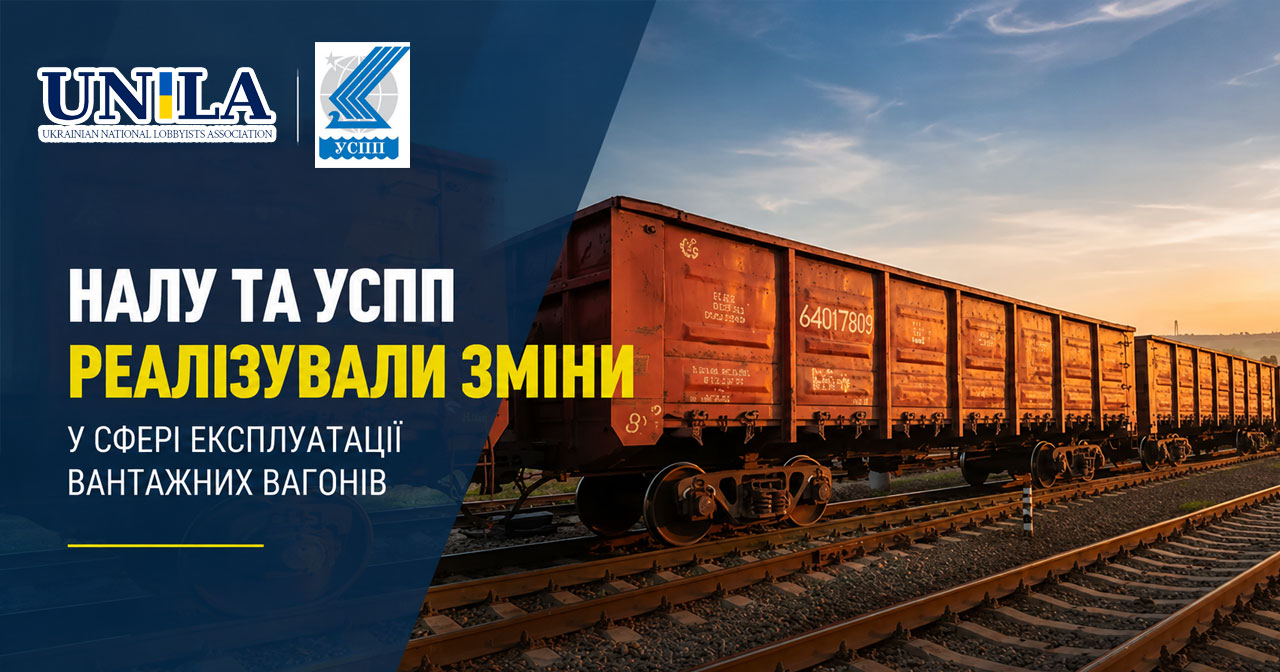
ULIE and UNLA initiated changes to the regulation of freight cars operation in the war
The Ukrainian National Lobbyists Association, together with the Ukrainian League of Industrialists and Entrepreneurs, implemented an important task of drafting bylaws in the field of railway transport regulation.
This is the problem of mechanical write-off of freight cars based solely on age, which, according to business representatives and industry experts, poses serious risks to the economy, logistics and defense stability of the state in a full-scale war.
The Ukrainian League of Industrialists and Entrepreneurs and the National Association of Lobbyists of Ukraine appealed to Oleksiy Kuleba, Vice Prime Minister for Reconstruction of Ukraine, Minister of Development of Communities and Territories of Ukraine, regarding the need to improve the current regulation in the field of extending the service life of freight cars.
The appeal was prompted by numerous appeals from industry associations and railway transportation market participants regarding the risks arising from the current approach to wagon write-offs.
A special expert group was set up at the ULIE and the Anti-Crisis Headquarters for Economic Resilience under Martial Law with the participation of representatives of JSC Ukrzaliznytsia, rolling stock manufacturers, car fleet operators, car building and car repair companies, industry associations, independent experts, and representatives of the National Association of Lobbyists of Ukraine to comprehensively study the issue.
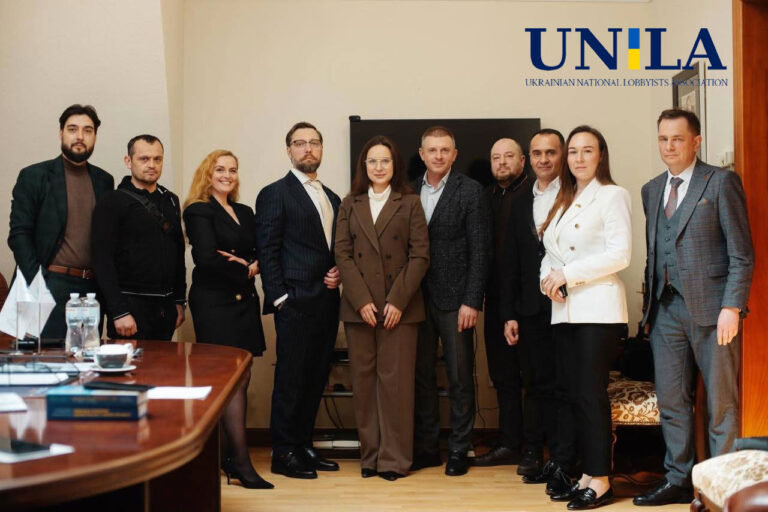
Lobbyists of the Ukrainian National Lobbyists Association are represented in the working group. The secretary of the working group is Lyudmyla Kozhura, a representative of the UNLA team.
The expert group analyzed the current regulations, in particular the provisions of the Order of the Ministry of Infrastructure of Ukraine No. 647 dated November 30, 2021 “On Approval of the Procedure for Conducting a Complex of Diagnostic, Repair and Registration Operations Aimed at Extending the Service Life of Freight Cars”.
This document defines the mechanism for extending the service life of railcars, the criteria for assessing their technical condition and the procedure for making decisions on the further operation of rolling stock.
The UUIE emphasizes that the current model is largely based on the calendar limitations of the service life of cars and does not fully take into account their actual technical condition, as well as the current capabilities of the car repair industry to diagnose, repair and restore the residual life.
“In times of war, the country cannot afford to artificially reduce its logistics capabilities without a comprehensive assessment of the consequences for the economy, exports and critical needs of the state,” emphasize representatives of the business community.
Today, rail logistics is one of the key elements of the country’s economic sustainability. It is the railways that provide transportation of products from the agricultural sector, mining and metals, chemical industry, energy, construction and other strategic sectors of the economy.
The problem is especially relevant in the context of martial law and the upcoming post-war recovery of Ukraine, when a sufficient number of freight cars is critical to support exports, transportation of strategic goods and the smooth operation of industry.
According to market participants, the massive write-off of railcars without a comprehensive technical assessment could lead to a shortage of rolling stock, higher transportation costs and a significant financial burden on Ukrainian producers already operating in a challenging military logistics environment.
As part of its proposals, the expert group suggests a number of amendments to Order No. 647, in particular:
- to allow the extension of the service life of railcars beyond the standard term, subject to successful completion of a comprehensive technical inspection;
- to expand the list of entities that can carry out diagnostic, repair and registration operations;
- create an accreditation mechanism for companies authorized to conduct technical inspection of railcars;
- develop a state program for the restoration and development of Ukraine’s transport sector with mechanisms to stimulate the renewal of rolling stock.
Separately, it is proposed to leave the functions of conducting the relevant procedures to the specialized institute of Ukrzaliznytsia for the period of martial law and six months after its termination.
UNLA emphasizes that this case is an example of practical and professional lobbying, when business, experts and government institutions work together on systemic solutions for the economic sustainability of the state and the stability of Ukraine’s critical infrastructure.