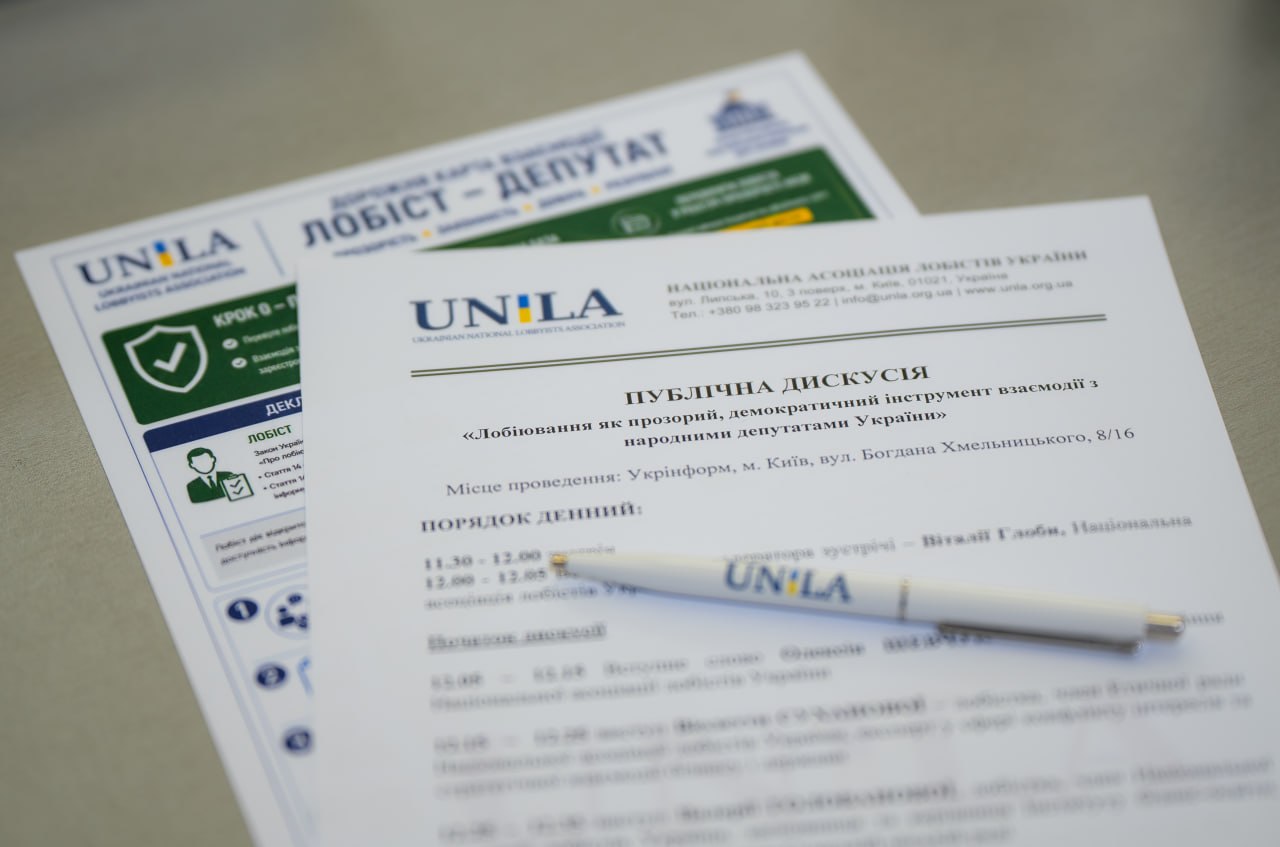
How professional lobbying works in Ukraine: Steps 1-4 of the Lobbyist to MP roadmap
After the basic principles have been formed (Step 0), the Ukrainian National Lobbyists Association (UNLA) presents the practical part of the roadmap for interaction between lobbyists and MPs. It is a systematic and legal mechanism of influence on the legislative process that complies with the new rules introduced by the Law of Ukraine “On Lobbying”.
This law established clear rules for lobbyists’ activities, their accountability and created a control tool – the Transparency Register administered by the NACP. From now on, any influence on government decisions must be exercised openly, in compliance with the principles of transparency and integrity.
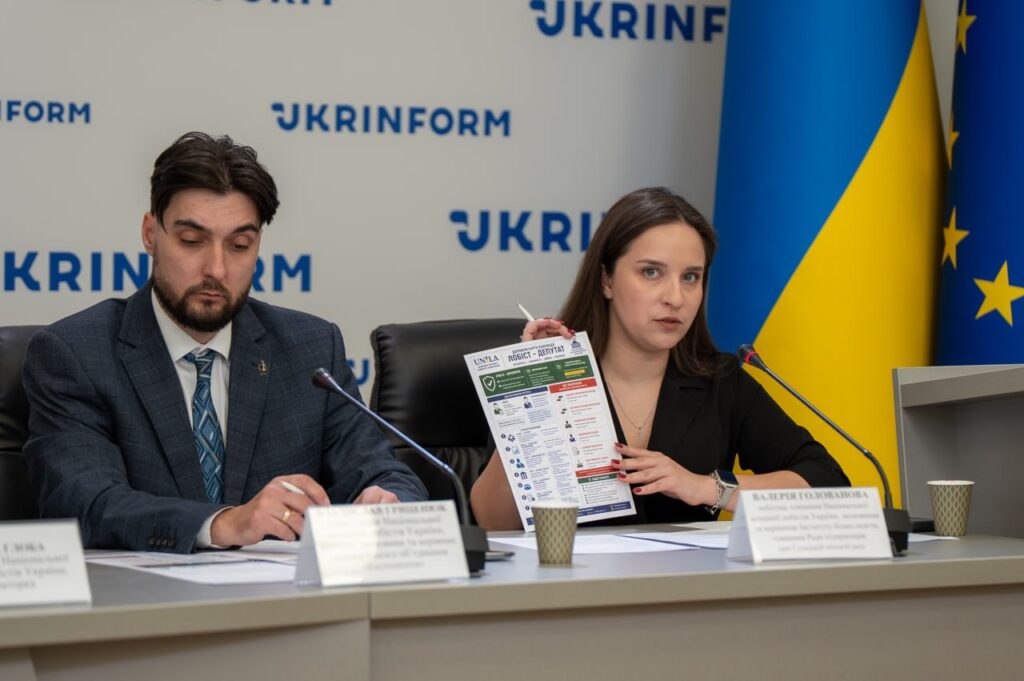
Lobbyist Valeriia Holovanova reviewed in detail the sequence from initiating meetings to preparing proposals that could form the basis of legislative initiatives.
Step 1. An open meeting
The interaction begins with an official meeting between the lobbyist and the MP.
The key requirement is full transparency. A lobbyist is obliged to be:
- have the status of a registered lobbying entity in the Transparency Register;
- clearly identify yourself, your client (beneficiary) and the subject of lobbying;
- act within the scope of the declared activities.
The law explicitly provides for registration and reporting obligations, and all information about lobbying entities and their activities is public.
Step 2. Analytics and proposal preparation
The central element of professional lobbying is not communication as such, but content.
The lobbyist creates a comprehensive analytical package that includes:
- a description of the problem and its impact on the market or society;
- economic justification of the proposed changes;
- comparative analysis with EU legislation;
- specific wording of amendments to regulatory acts.
This approach is fully in line with the essence of lobbying as defined by law – as a professional activity aimed at influencing the decisions of the authorities through arguments, expertise and facts, rather than informal mechanisms.
Step 3. The decision of the MP
The principled position of the legislation is that the final decision always remains with the authority.
A lobbyist has no right:
- to put pressure on an official;
- offer or provide an unlawful benefit.
Any such actions fall under anti-corruption legislation and may be qualified as criminal offenses. The law on lobbying is directly aimed at eliminating “shadow influence” and bringing interaction into the legal sphere.
Thus, the role of a lobbyist is to persuade exclusively through arguments, analysis, and public position.
Step 4. Consideration by the relevant committee
If the initiative is supported by an MP, it goes to the parliamentary procedure – consideration by the relevant committee of the Verkhovna Rada.
This process is part of the standard legislative cycle and ensures institutional control over the quality of regulatory changes.
Conclusion
The current model of lobbying in Ukraine is no longer a backroom deal, but a regulated and public process.
The introduction of the Transparency Register and clear rules of operation means that:
- lobbying becomes a legal tool for business and experts to participate in policy making;
- the level of corruption risks is reduced;
- The quality of legislative decisions is improving.
It is this model, based on expertise, openness and responsibility, that builds trust between the state, business and society and meets European standards of public governance.