The Value of Professional Lobbying for Local Self-Government: European and Regional Experiences in Ukraine
The Ukrainian National Lobbyists Association continues to share photos and videos from the grand opening of the UNLA Odessa chapter.
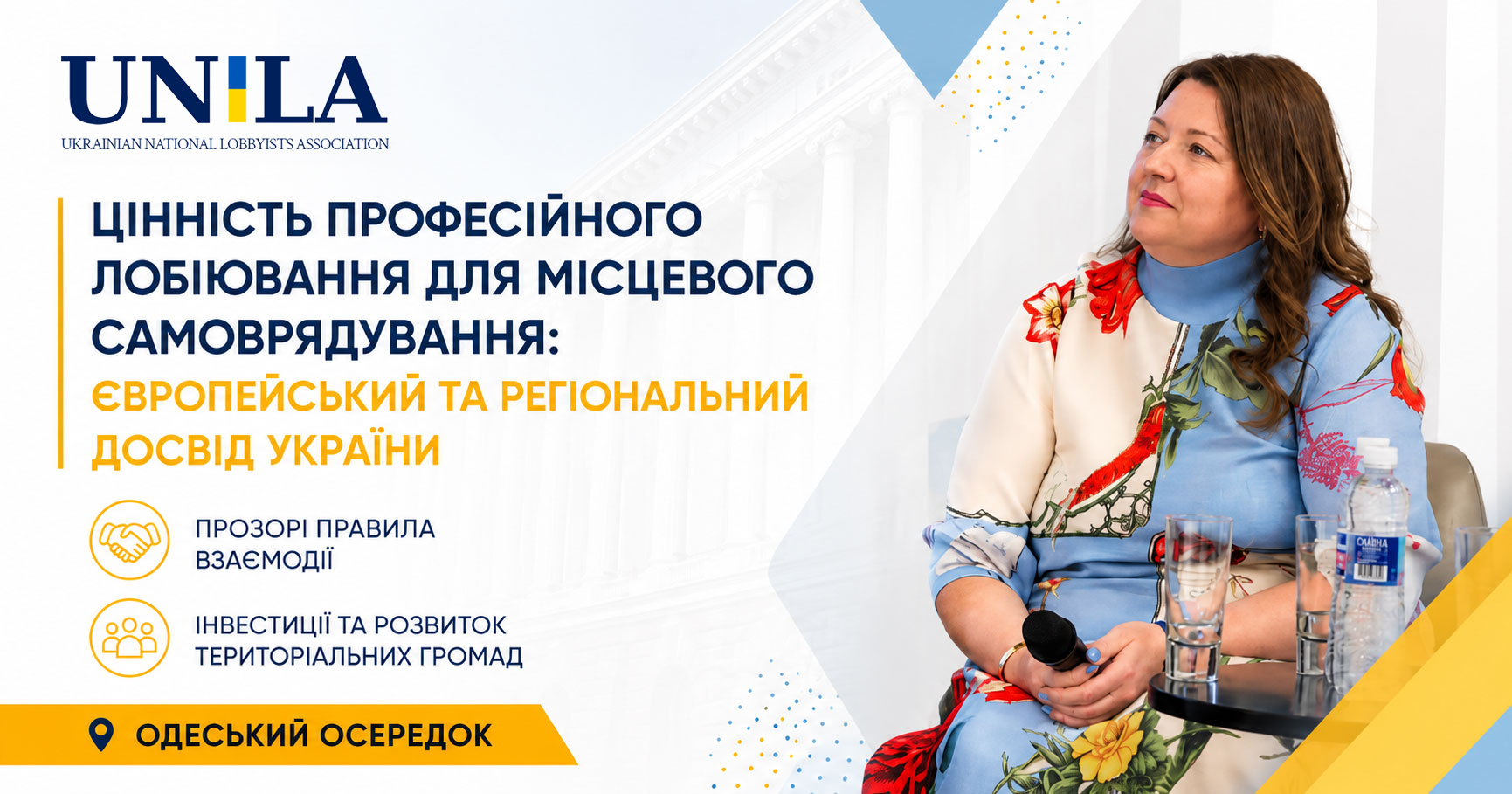
One of the key parts of the event was a panel discussion on the role of professional lobbying in the development of local communities, attracting investment, and building transparent cooperation between government, business, and civil society.
Tamilla Afanasyeva, a member of the Odesa Regional Council and head of the municipal agency “Grant Office 5T,” focused on practical opportunities for communities. She emphasized that professional advocacy can help attract international technical assistance, grant funding, and private investment.
According to the speaker, it is important for communities not only to develop high-quality projects but also to systematically present their needs to government agencies, international foundations, and potential partners.
Dovidas Vitkauskas, an advisor to the Lithuanian government and former head of the European Union project “Support for Judicial Reform in Ukraine,” presented European experience in regulating lobbying.
He emphasized that the representation of interests is a natural part of the democratic process, but it must be carried out according to clear rules that are the same for everyone. Transparency in communications, adherence to professional ethics, and effective oversight mechanisms should prevent hidden influence, conflicts of interest, and backroom decision-making.
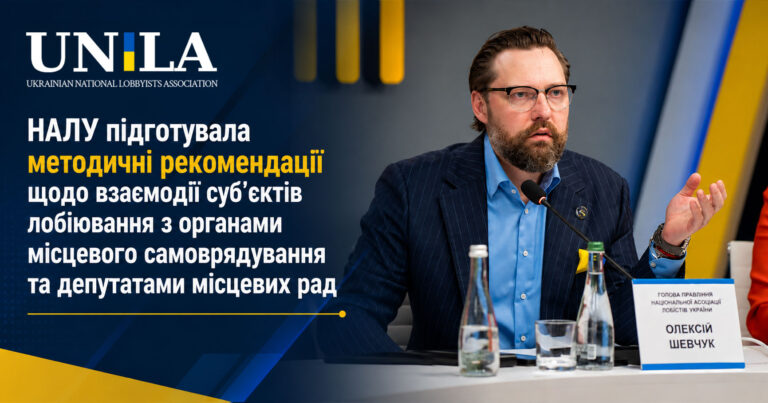
It is important to note that the Ukrainian National Lobbyists Association has already developed Guidelines on the Interaction of Lobbying Entities with Local Government Bodies and Local Council Members.
The document systematizes legal provisions and proposes a practical framework for transparent interaction: from identifying the lobbyist and defining the subject of lobbying to documenting contacts, reviewing proposals, making decisions, and assessing their impact on the community. The recommendations are based on the principles of legality, openness, integrity, equal access, and accountability.
Thus, the proposals put forward during the discussion are already being put into practice in the work of UNLA. Professional lobbying can serve not only as a tool for mobilizing resources for communities, but also as the foundation for open, accountable, and legally defined engagement with local authorities.