UNLA continues its work on the legal regulation of electronic evidence and OSINT materials
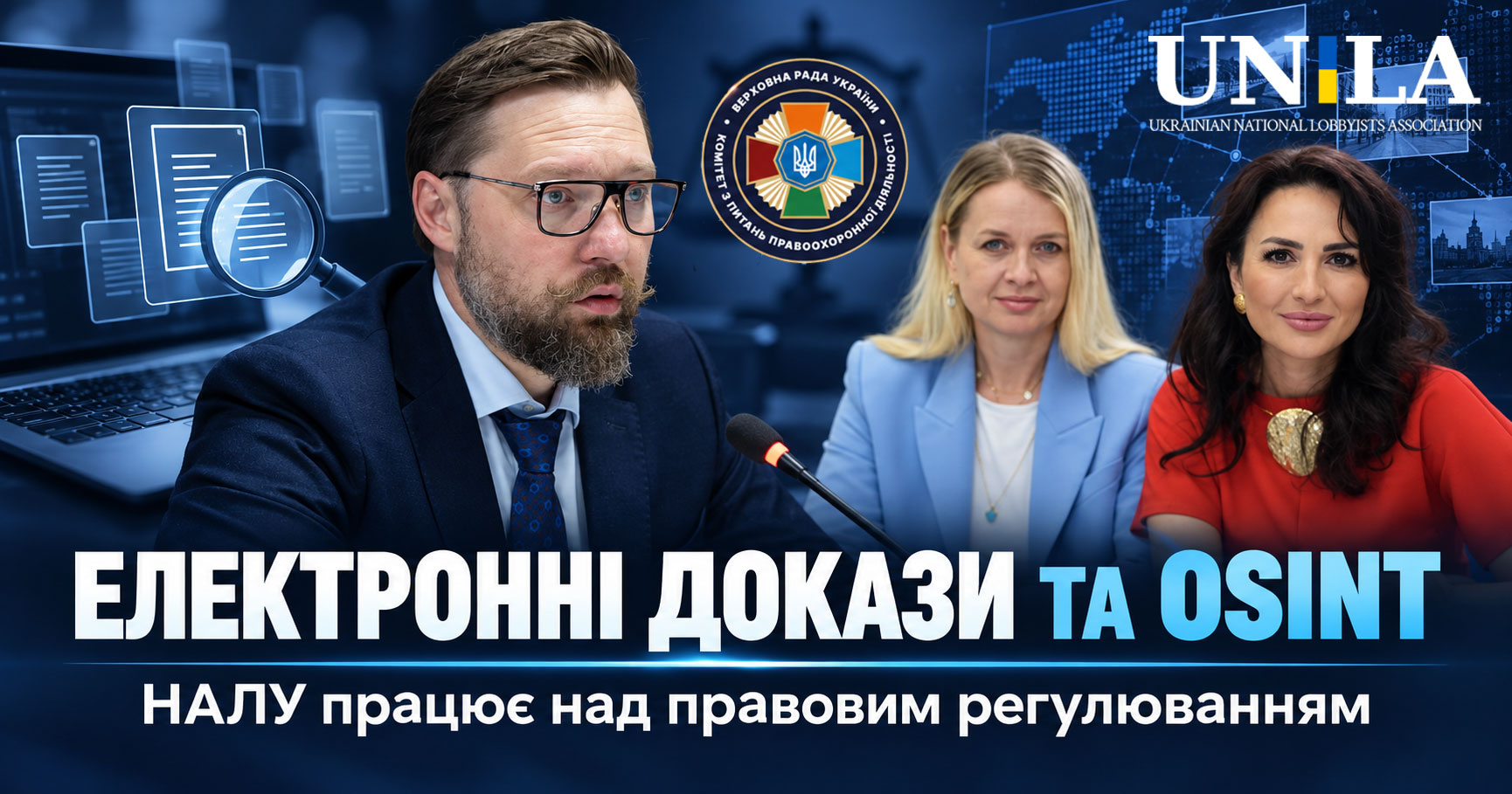
Representatives of the Ukrainian National Lobbyists Association continue their productive work in the Working Group on Regulating the Use of Electronic Evidence and OSINT Research Materials, which operates under the Verkhovna Rada Committee on Law Enforcement. The focus is on improving procedural rules for handling digital information and developing legislative solutions that will meet the needs of law enforcement practice.
Experts discussed the status of the provisions in the draft law amending Chapter 4 of the Criminal Procedure Code of Ukraine, “Evidence and Proof.” This involves the systematic development of legal mechanisms for the use of electronic evidence, the quality of which determines the effectiveness of proof in criminal proceedings.
The second area focused on law enforcement agencies’ use of OSINT research materials and determining the need for amendments to current legislation. Practical experience in using information from open sources should help identify issues requiring regulatory action and ensure a consistent approach to its procedural application.
A separate item on the agenda provided for a discussion of the main provisions regarding the urgent preservation of stored computer data and the partial disclosure of information flow data. Further development of the relevant articles should take into account the need for the timely preservation of digital information and appropriate procedural safeguards.
The fourth area of focus is the current status of work on virtual assets, involving representatives of ARMA and the Ministry of Justice of Ukraine. The involvement of specialized agencies lays the groundwork for aligning legislative approaches with the practical needs of working with such assets.
UNLA’s consistent participation in the group’s work promotes professional dialogue among legislators, government agencies, and the expert community. Continuing this work is essential for establishing clear and practical rules for the use of digital information in criminal proceedings, ensuring an adequate evidentiary basis, and protecting the rights of those involved in the proceedings.