
The Advanced School of Lobbying: A Closed Forum for Restoring Dialogue Between Parliament and Business
A new institutional culture of interaction between business and government is taking shape in Ukraine. The Higher School of Lobbying is becoming a key instrument in this process—a platform that systematically promotes the ideology of transparent, ethical, and professional lobbying as an integral part of the democratic model of governance.
What Is the Higher School of Lobbying?
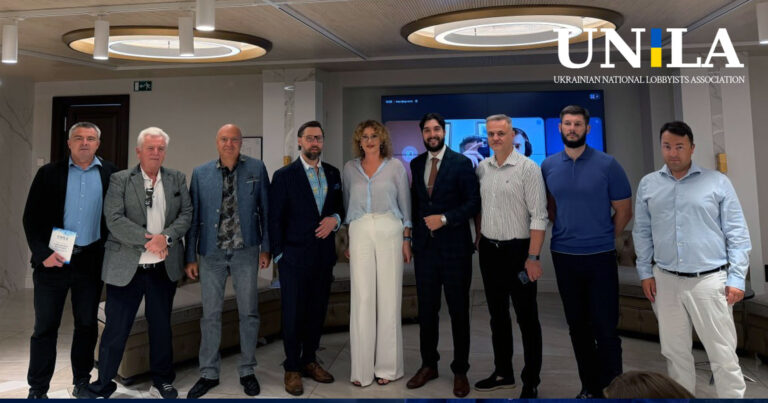
The Higher School of Lobbying is a closed professional platform that brings together lobbyists and members of parliament for regular communication. The format includes:
- regular meetings several times a month
- the participation of a limited group of vetted lobbyists
- careful selection of participants based on criteria of integrity and professionalism
- Ethical Standards for Interaction Between Business and Parliament
In essence, this involves creating a new type of institutional club that combines exclusivity with high standards of transparency.
Why was there a need for the platform?
Despite the passage of the lobbying law, its practical implementation remains stalled. The main reasons are:
1. The lawmakers’ own lack of understanding of the law
Some members of parliament do not fully understand the nature of lobbying as a legal and necessary process.
2. Fear of the law enforcement system
Any interaction between a lawmaker and business representatives is often perceived as potentially corrupt. This creates an environment where even basic communication is paralyzed.
3. Widespread distrust of the institution of lobbying
In Ukraine, a distorted perception of lobbying has historically taken root, one that is equated with shady practices.
UNLA’s Position
According to Oleksiy Shevchuk, head of the Ukrainian National Lobbyists Association (UNLA), the key objective is to integrate lobbying into normal parliamentary communication through outreach efforts:
- explain to lawmakers that lobbying is a natural and legitimate process
- foster a culture of open dialogue
- overcome the psychological barrier of fear of interaction
The School of Lobbying serves as a tool for this transformation.
How the format works
The platform operates as a private club with a high level of trust:
- The meetings take place within a small professional circle
- Participants undergo a preliminary screening
- The discussions focus on practical examples of collaboration
- An environment is created that is free from the risk of reputational or legal manipulation
This approach makes it possible to create a safe space for restoring communication.
Key Issue: The Criminalization of Communication
A dangerous trend has emerged in parliament today—any contact a lawmaker has outside their inner circle is viewed as a potential violation.
This leads to:
- self-censorship by lawmakers
- Avoiding meetings with business partners
- hindering the development of the entire lobbying industry
As a result, the law exists in theory but does not work in practice.
Strategic Goal
The Higher School of Lobbying aims to:
- restore confidence in the institution of lobbying
- to establish a new code of conduct
- ensure that the law is actually enforced
- establish a professional community of lobbyists
This is a long-term process that requires systematic efforts on the part of both the business community and the government.
The Higher School of Lobbying is not merely an educational or discussion forum. It is a tool for institutional transformation designed to bring the interaction between business and government out of the shadows and into a transparent, regulated, and professional framework.
Under the current circumstances, it is precisely these closed-door but ethical platforms that are becoming critically important for the full-scale launch of the lobbying market in Ukraine.