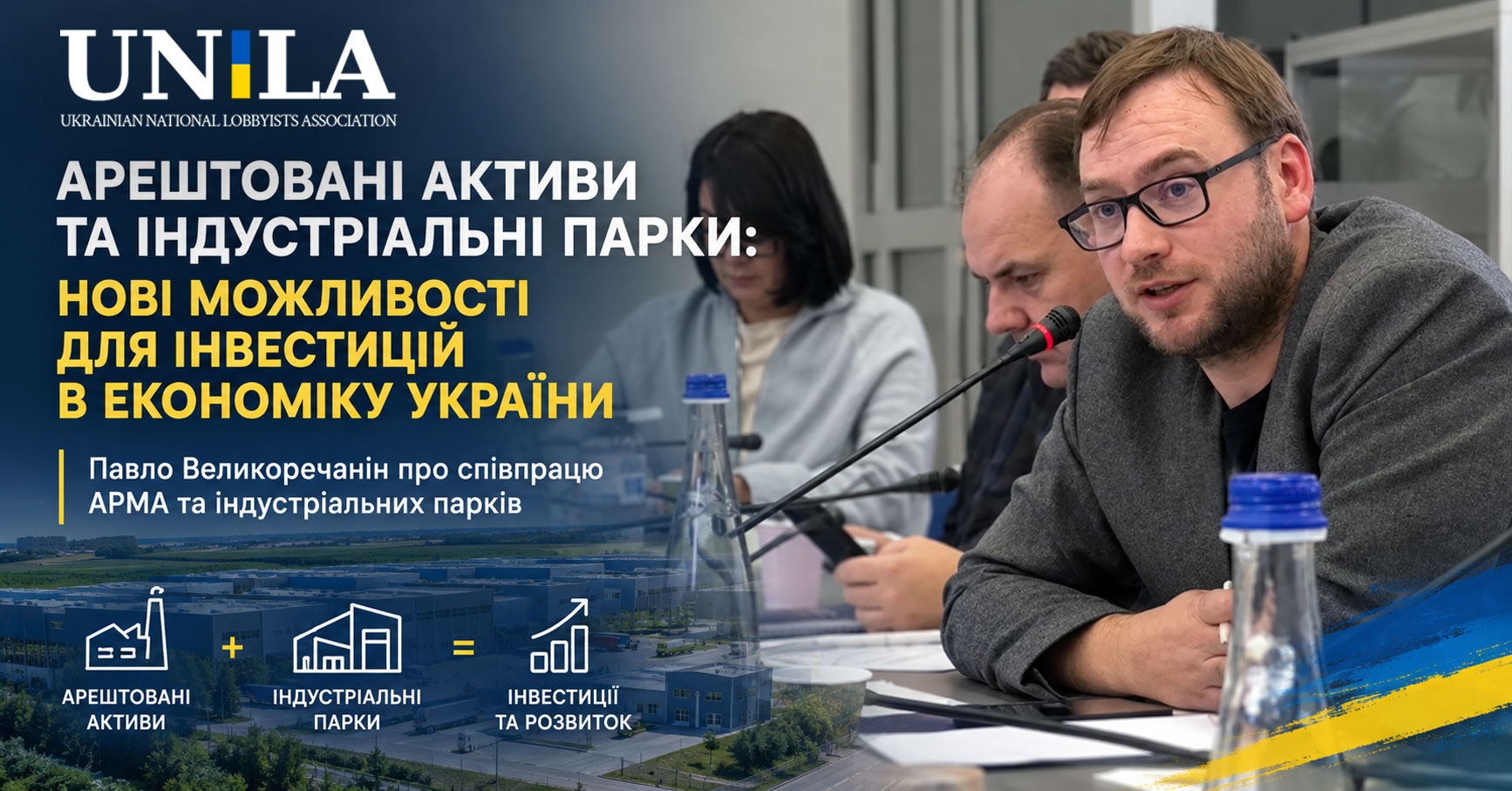
Pavlo Velykorechanin: Seized Assets Could Become a Resource for the Development of Ukraine’s Industrial Parks
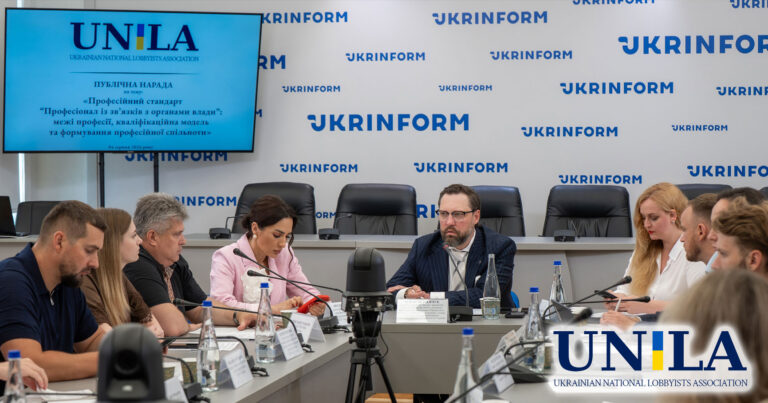
On October 30, during the roundtable discussion “Industrial Parks of Ukraine: Investment and Industrial Reconstruction,” which took place at the Ukrinform news agency, Pavlo Velykorechanin, former deputy chairman of ARMA, raised the issue of involving the business community in the management of seized assets. In his view, combining the capabilities of ARMA and industrial parks could help restore industrial facilities to economic activity, attract investment, and create new production capacity even amid a full-scale war.
Seized industrial assets could serve as an additional resource for the development of industrial parks and for attracting investment into the Ukrainian economy. This was stated by Pavlo Velykorechanin while commenting on the prospects for cooperation between industrial parks and the Agency for the Recovery and Management of Assets (ARMA).
According to him, during the most recent inventory in 2026, approximately 20,000 assets were identified that are listed in the registry of seized property. These include land parcels, retail spaces, hotels, and large industrial complexes that could potentially be utilized for economic activity through management mechanisms.
Velykorechanin cited the “Cheksil” enterprise in the Chernihiv region—which has approximately 185,000 square meters of industrial space—as one example. According to him, this facility is currently up for transfer to a new management team.
At the same time, to encourage greater participation by the private sector, it is necessary to improve the legal framework governing the management of seized assets.
Velykorechanin pointed out that the current model calls for directing approximately 90% of the profits from asset management to the state budget. In his view, this mechanism does not provide sufficient economic incentives for entrepreneurs who are willing to invest in the restoration and development of production.
Among the possible changes, he mentioned a 50-50 profit-sharing model, under which half of the revenue would go to the state budget, while the other half would remain with the business. It is also proposed to consider introducing a transition period with tax incentives for entrepreneurs who take over seized properties and invest in their operations.
Special attention was paid to the possibility of transferring ready-to-operate manufacturing facilities to new management. As an example, Pavlo Velykorechanin cited a meat-processing plant in the Dnipropetrovsk region, equipped with Italian machinery, for which, he said, a competition to select a manager is expected to be held in the near future.
Attracting foreign investors is also a key priority. Velykorechanin noted that the relevant procedural mechanisms have already been finalized, which should expand opportunities for international businesses to participate in the management of seized assets.
Synergy Between Industrial Parks and ARMA
According to the speaker, cooperation between industrial parks and ARMA could create a new model for the economic use of property that, due to its seizure, is not currently involved in full-scale economic activity.
This is particularly relevant given the significant number of assets linked to Russian capital that are currently the subject of ongoing court proceedings and other legal proceedings.
Velykorechanin emphasized the need to establish mechanisms that would allow investors who have managed and developed such enterprises to receive priority opportunities to acquire the assets in the event of their confiscation.
As an example, he cited the case of the company “Pobutkhim” in Vinnytsia, where, following the confiscation of an asset, it was acquired by the VARUS Group, which had previously been involved in managing the property.
“I am ready to work together to further develop the industrial parks and seized assets sectors. We must create opportunities for investors so that these enterprises can operate and generate profits for Ukraine even amid the war,” said Pavlo Velykorechanin.
For the development of industrial parks, such cooperation opens up additional opportunities: the use of existing industrial infrastructure, a reduction in the time required to launch production, the attraction of private and foreign capital, the creation of jobs, and an increase in budget revenues.
The Ukrainian National Lobbyists Association emphasizes the importance of developing legislative mechanisms that will promote constructive dialogue between the government and the business community, protect the interests of investors, and ensure the effective utilization of Ukraine’s economic potential.