
Lifetime PEP as a latent influence campaign: Oleksiy Shevchuk on the risks for Ukraine
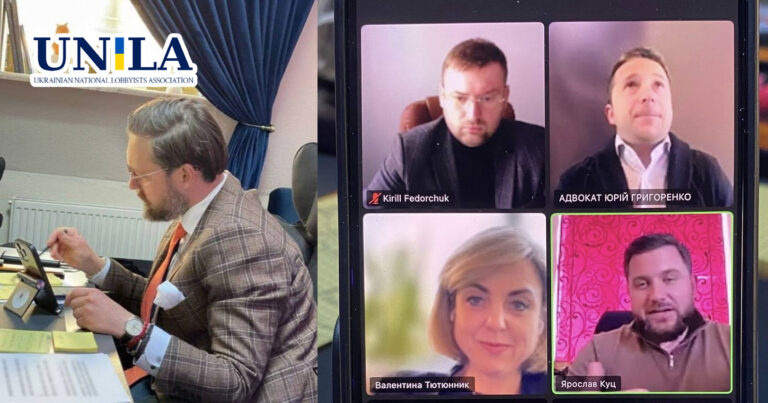
In his speech at the public discussion “Abolition of lifetime PEPs: a step towards renewal of the civil service,” Oleksiy Shevchuk, Chairman of the Board of the Ukrainian National Lobbyists Association, said that initiatives to introduce lifetime status of politically exposed persons (PEPs) may have signs of a planned and latent campaign to influence government processes.
According to him, manipulations about the need for lifelong financial monitoring of persons who were involved in the civil service, as well as their family members, are actively spreading in the public space.
PEP as a punitive mechanism
Oleksiy Shevchuk emphasized that the lifetime status of a PEP actually turns the financial monitoring tool into a punitive mechanism.
“This is not about fighting corruption, but about a system of constant control that extends to a person and his or her family. This contradicts the principle of proportionality and international practice,” he said.
He emphasized that in the European Union, the PEP status is limited in time (usually 12 months) with subsequent review, while in Ukraine, an approach to its actual indefinite duration is being formed.
Impact on the civil service
According to Shevchuk, the problem of the lifetime status of PEPs directly affects the state’s human resources.
“Strong business professionals are ready to go to public service for several years, but they are not ready for lifelong financial control for themselves and their families,” he emphasized.
According to him, this creates a systemic barrier to attracting professionals to public administration.
Signs of systemic impact
Oleksiy Shevchuk also noted that the promotion of the idea of lifetime PEPs can be used as a tool for indirect control over state institutions.
This approach creates an atmosphere of constant risk and discourages people from participating in the public sector.
Alternative: risk-based model
In his speech, he emphasized the need to move to a risk-based approach that meets international standards.
In particular:
- limiting the term of PEP status after the public function is completed;
- review of the status after a certain period (for example, 12 months);
- applying financial monitoring only when there are real risks;
- preventing the automatic extension of control to family members.
APEX Council initiative
The initiative to create an interdisciplinary expert council, the APEX Council, which will provide independent opinions on the financial risks of PEPs after the end of public service, was also announced.
The National Association of Lobbyists of Ukraine emphasizes that the PEP institute should remain a tool of control, not a lifetime restriction.
The key principle should be proportionality and balance between anti-corruption mechanisms and the state’s ability to attract professional staff.