The Right to Practice and Responsibility to the Client
Who can represent the interests of an inventor or entrepreneur, what knowledge must this specialist possess, and how will they be held accountable for professional misconduct? The answers to these questions will determine the scope of the patent attorney reform. These issues are of direct importance to businesses: the quality of representation affects the registration of rights, the protection of confidential information, and the ability to safeguard intellectual property assets.
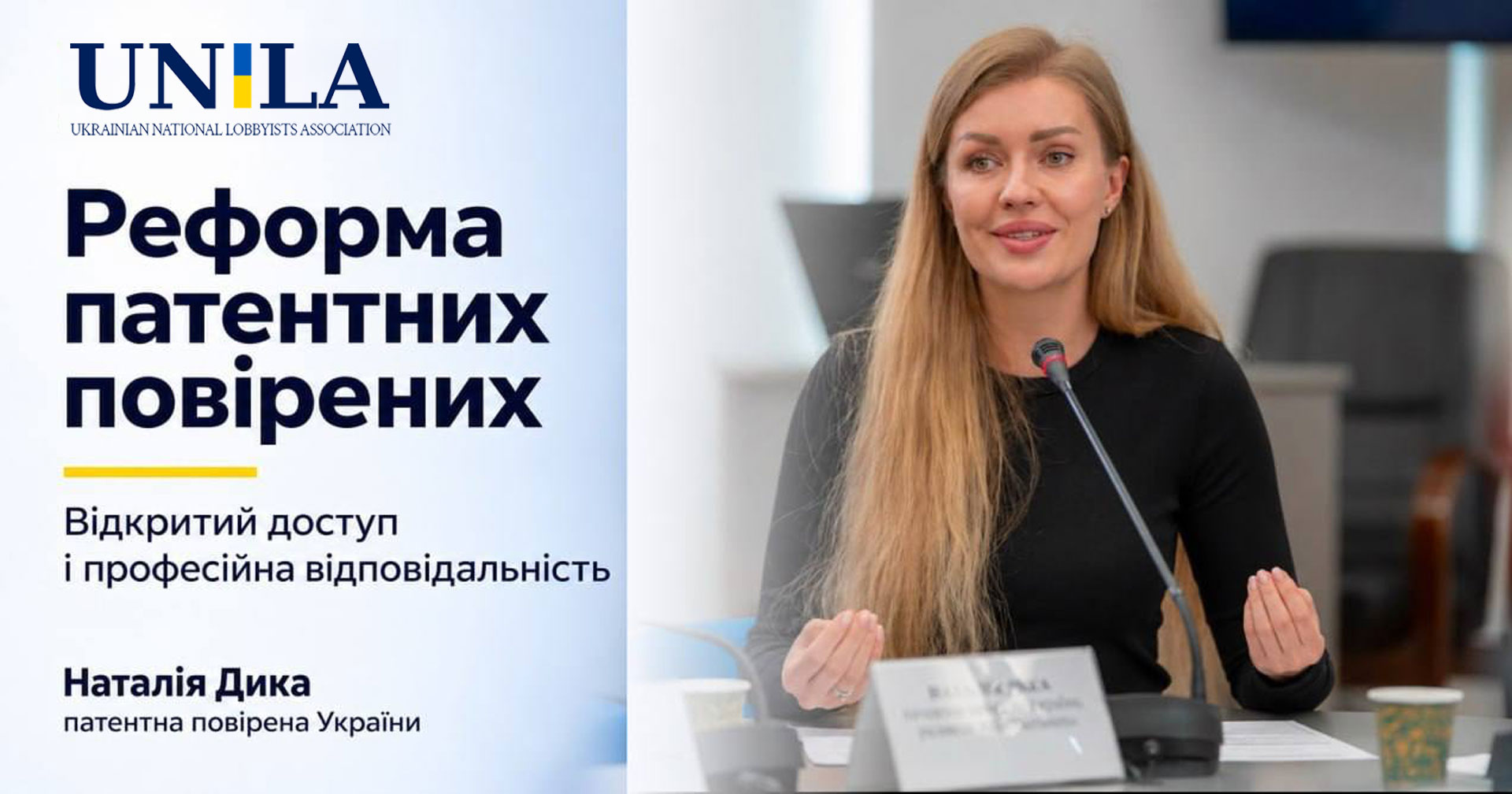
Natalia Dyka, a Ukrainian patent attorney and counsel at BARRISTERS Law Firm, believes that tightening the requirements for professional representation should go hand in hand with the creation of transparent and predictable conditions for obtaining professional status. Her position is also based on her own experience: more than ten years of work in the field of intellectual property and a long wait for the opportunity to undergo certification.
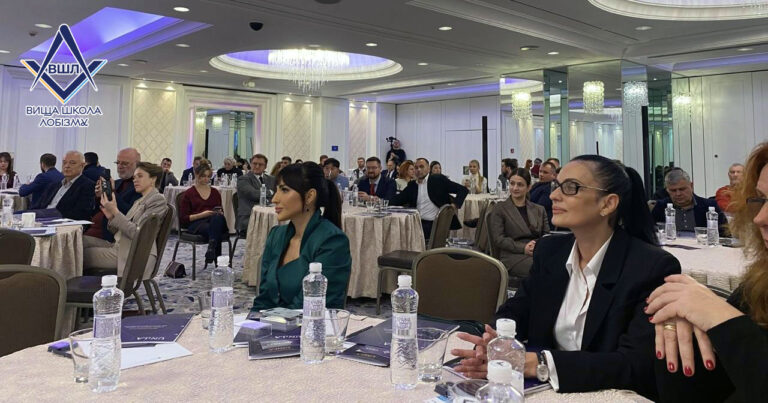
These issues were the focus of a roundtable discussion held on November 10, 2026, at Ukrinform and organized by the Ukrainian National Lobbyists Association. Moderated by Oleksiy Shevchuk, chairman of the UNLA board, representatives from the professional community, business, academia, and government agencies discussed a working draft of the bill “On Professional Representatives in Intellectual Property Matters,” prepared by Daria Tymchenko and Kostyantyn Zerov.
Professional status should have practical significance
The activities of patent attorneys in Ukraine are already regulated by specific laws and subordinate legislation. In particular, a Regulation approved by Order No. 20599 of the Ministry of Economy has been in effect since March 2024. However, the profession requires a comprehensive legislative framework that combines qualification requirements, independence, professional confidentiality, ethics, and accountability.
As Ms. Natalia points out, it is important that certification have real value. Verified qualifications should give clients clear reasons to trust a representative and provide the specialist with an incentive to maintain standards and invest in their area of expertise.
Hence her proposal: to allow residents to retain the right to file applications and conduct their own cases before the National Intellectual Property Office, while entrusting external professional representation to certified patent attorneys.
This represents a change from the current approach. For example, the Law of Ukraine “On the Protection of Rights to Marks for Goods and Services” currently allows an application to be filed on behalf of the applicant through an intellectual property representative or another authorized person. Special requirements for the representation of certain categories of persons with permanent residence or location outside Ukraine are established separately, taking into account international treaties.
The proposed law must clearly define the scope of the proposed changes, the involvement of company employees, the relationship between the statuses of attorneys and patent agents, and the transitional provisions.
OPEN ACCESS AS A CONDITION FOR NEW AUTHORITIES
Natalia Dyka links exclusive representation to regular certification, transparent eligibility criteria, professional development, and effective disciplinary accountability. Every qualified candidate must have a realistic opportunity to obtain this status.
This approach elaborates on the model presented by Daria Tymchenko: it is proposed that certification be conducted at least once a year, with its organization entrusted to professional self-governing bodies. The predictability of the exams should eliminate long gaps in access to the profession and allow candidates to plan their preparation.
Dyka places particular emphasis on education in the field of intellectual property. High-quality certification requires accessible education, practical training, and ongoing professional development. Without these, new qualification requirements risk becoming an additional barrier.
PHASED REFORM AND CLEAR GUARANTEES
Natalia Dyka suggests linking general changes to the representation of residents to the adoption of a new law on the matter. At the same time, she views specific requirements for proceedings before the collegial bodies of the National Office of Intellectual Property (NOIP)—primarily the Appeals Chamber—as a possible first practical step.
In such proceedings, specialized knowledge, the handling of evidence, and adherence to procedures take on particular importance. The proposed approach also provides for the preservation of self-representation.
According to Dyka, proper training of representatives could reduce the number of errors in documents, repeat requests, and procedural delays. However, the expected outcome will depend on the functioning of the entire system of professional standards.
According to Daria Tymchenko, the working draft provides for self-governing bodies with distinct powers, uniform ethical rules, a special disciplinary procedure, and the ability to appeal decisions. Current patent attorneys are to retain their status and specializations without having to undergo recertification. The scope of exclusive representation and the model for maintaining the registry remain subjects of discussion.
THE IMPORTANCE OF PROFESSIONAL DIALOGUE
The reform also has a European dimension, but it requires careful consideration of various models. Before the EUIPO, professional representation may be provided by both representatives on a special list and attorneys who meet the established requirements. The adoption of the Ukrainian law alone will not ensure automatic recognition of qualifications or the right to practice before European institutions.
That is precisely why the initiative by the Ukrainian National Lobbyists Association is so important; it has provided a platform for aligning professional proposals with the needs of applicants and the state. Open dialogue makes it possible to assess the consequences of restrictions, resolve contentious issues, and develop balanced solutions.
For Ms. Natalia, the goal of this work is to preserve and develop the profession, provide high-quality services, and earn clients’ trust. This can be achieved when specialized authority is accompanied by open access to the profession, proper training, and accountability for the results of one’s work.