The Ukrainian National Lobbyists Association has released a comprehensive analysis of the lobbying market for the first half of 2026
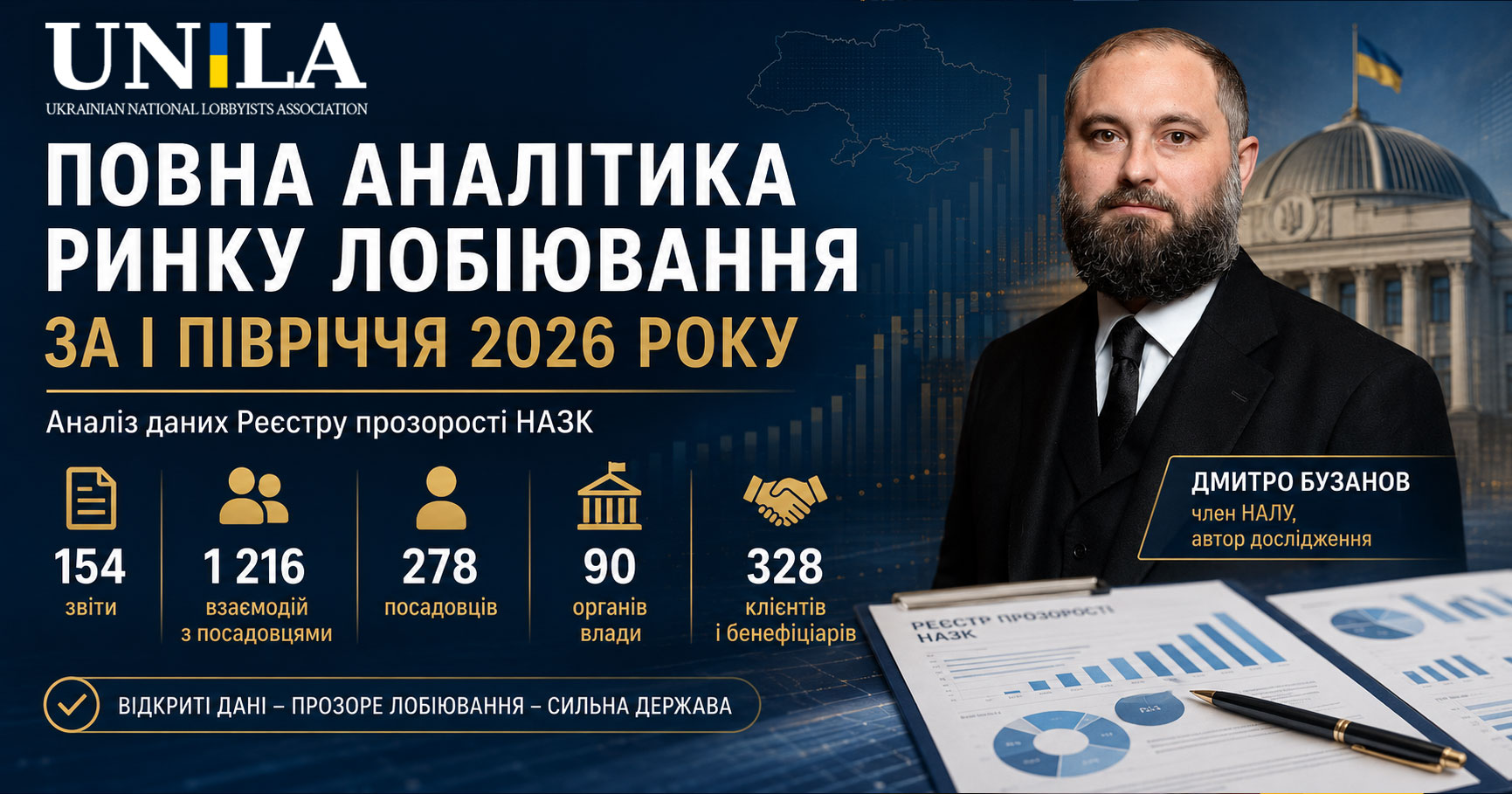
The Ukrainian National Lobbyists Association (UNLA) presents a comprehensive study of the state of the lobbying market in Ukraine for the first half of 2026. The report was authored by UNLA member Dmytro Buzanov, who conducted a comprehensive analysis of data from the NACP Transparency Registry following the conclusion of the second reporting cycle in accordance with the Law of Ukraine “On Lobbying.”
The study is one of the most comprehensive overviews of the Ukrainian lobbying market and contains statistics on lobbying entities, their interactions with government authorities, lobbying issues, areas of public policy, officials with whom lobbyists have worked, as well as information on the largest declared contracts and legislative initiatives.
The lobbying market continues to become more transparent
According to the analysis, during the first half of 2026, 154 reports were submitted by lobbying entities, declaring 1,216 interactions with public officials, 278 public officials, 90 government agencies, and 328 clients and beneficiaries. In addition, 40 entities submitted reports for the first time, indicating a gradual expansion of the market and the growth of a culture of transparent lobbying.
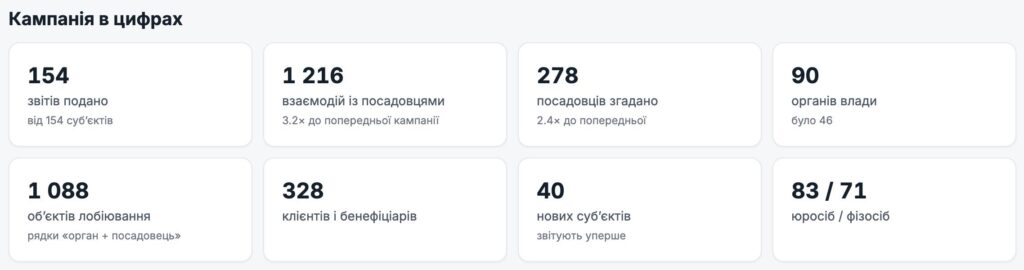
Compared to the previous reporting period, the number of reported transactions more than tripled. This indicates, first and foremost, that market participants have adapted to the new reporting rules and are disclosing information more fully in the Transparency Registry.
Who Were the Most Active Lobbyists?
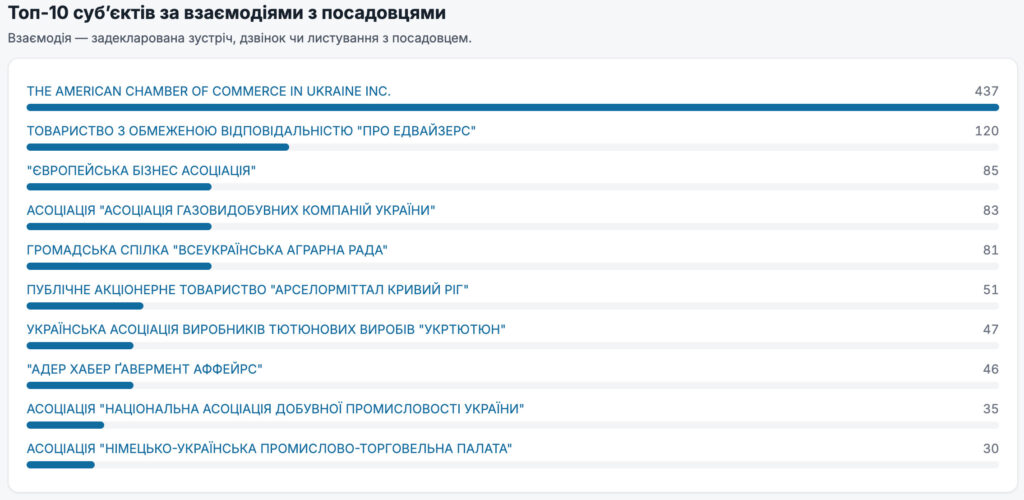
A separate section of the analysis is devoted to ranking entities based on the number of interactions with officials.
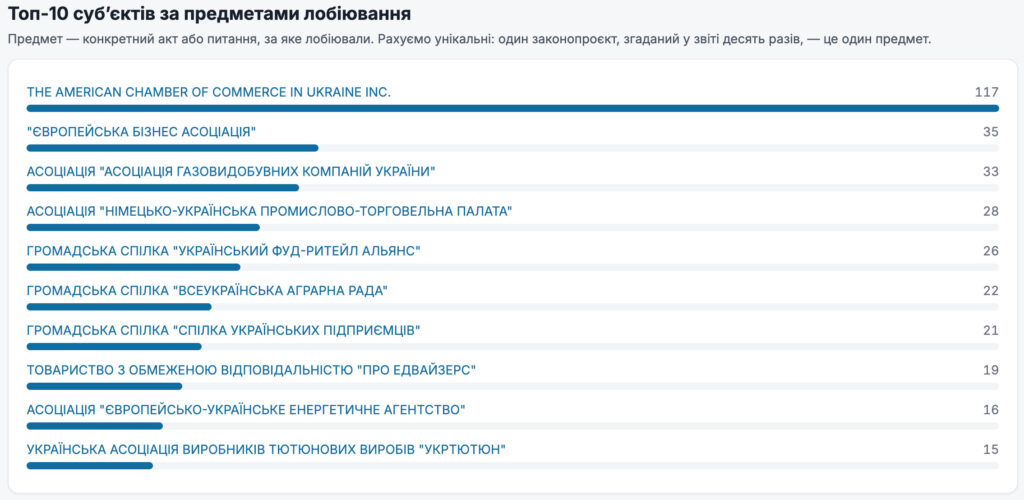
The American Chamber of Commerce in Ukraine took the lead, reporting 437 interactions with government officials. The top ten also included PRO Advisers, the European Business Association, the Association of Gas Producers of Ukraine, the All-Ukrainian Agrarian Council, and other major business associations and companies.
Which issues were lobbied for most often?
The study also shows that lobbyists were most active in relation to bills and regulations in the areas of the economy, tax policy, energy, the agricultural sector, and healthcare.
It is precisely these areas that currently shape the main agenda of professional lobbying in Ukraine.
The broadest coverage of government agencies
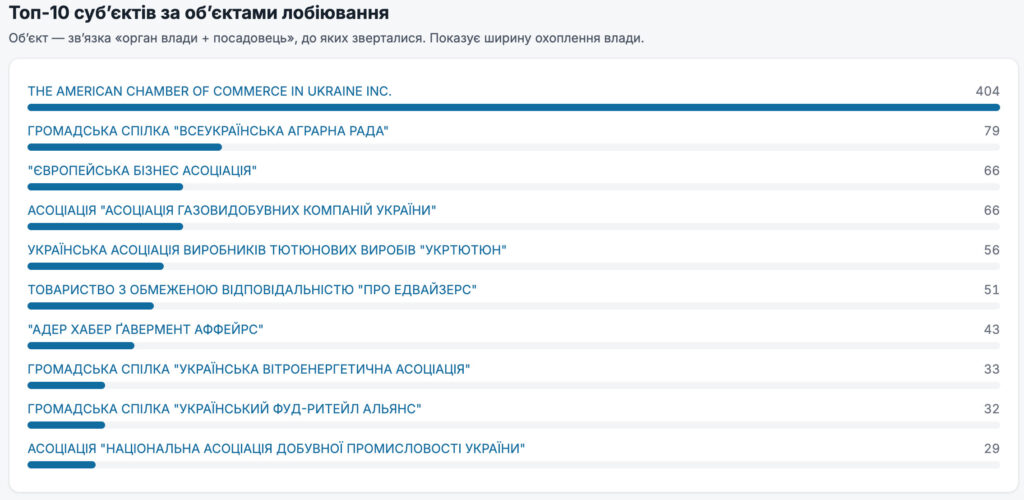
The analysis also shows which entities interacted with the largest number of government agencies and officials. This makes it possible to assess not only the intensity of their activities but also the scope of each market participant’s communications.
Who did the lobbyists interact with?
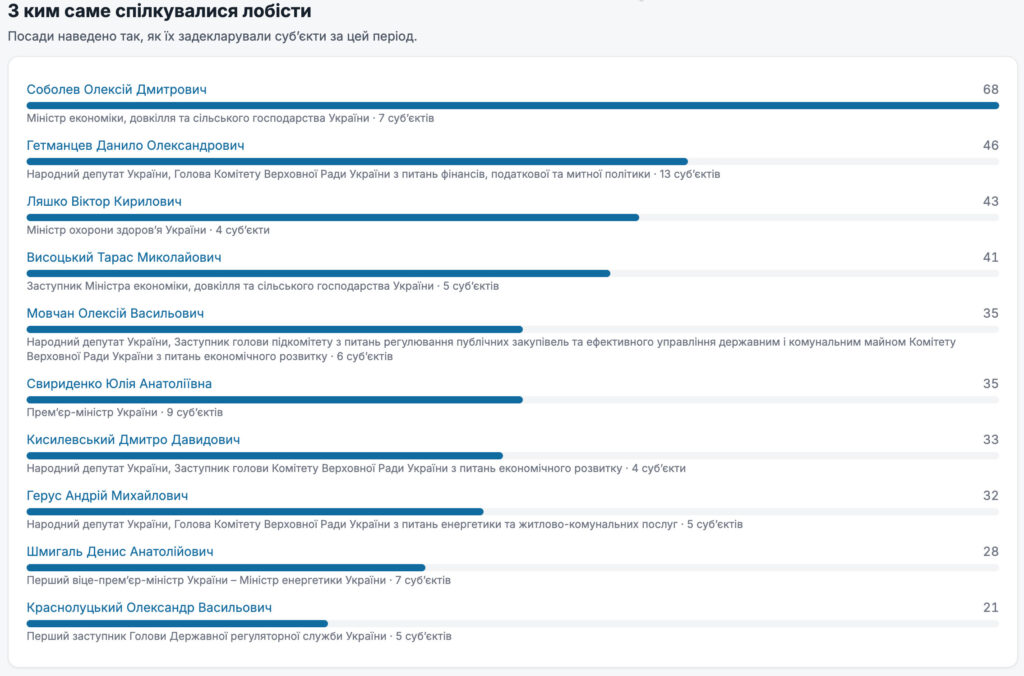
The study presents, for the first time, a ranking of officials who were most frequently mentioned in reports by lobbying entities.
The largest number of interactions was reported with representatives of the Verkhovna Rada of Ukraine, the Cabinet of Ministers, the Ministry of Economy, the Ministry of Health, and other central executive bodies.
Which government agencies were contacted most often?
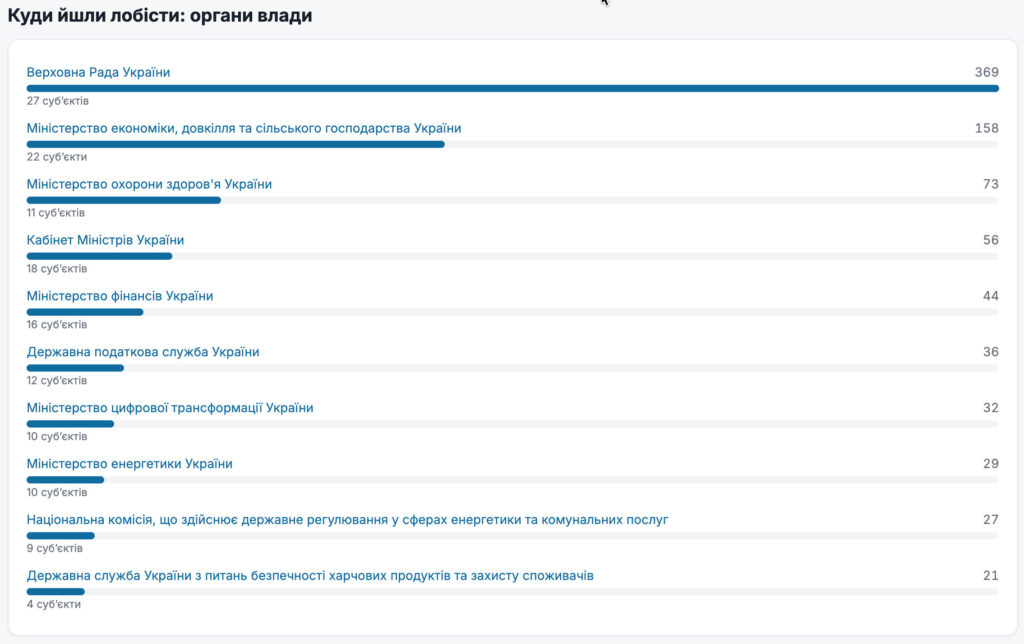
A separate section of the study focuses on the government agencies that lobbying entities approached most frequently.
The highest number of interactions occurred with the Verkhovna Rada of Ukraine, the Ministry of Economy, the Cabinet of Ministers of Ukraine, the Ministry of Finance, the Ministry of Health, and other central executive bodies.
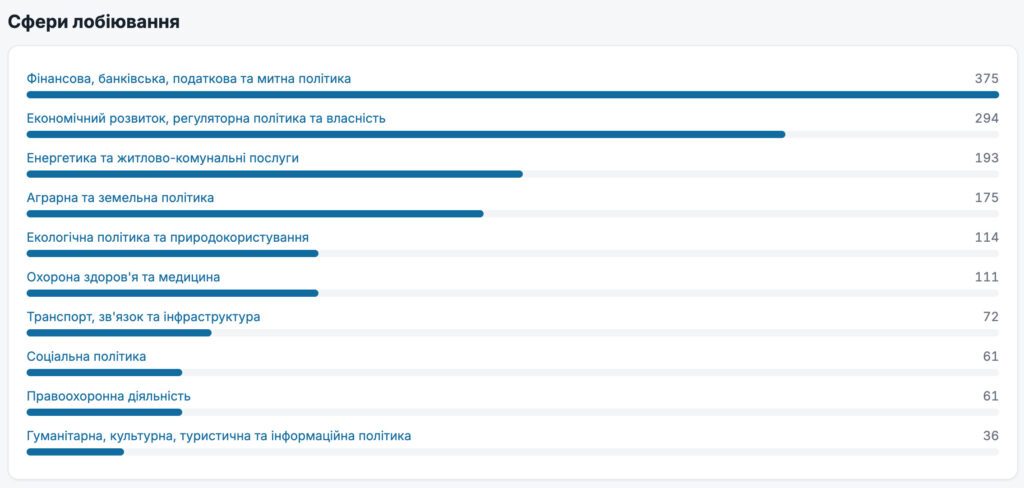
Main Areas of Lobbying
The most active areas of lobbying remain financial and tax policy, economic development, energy, the agricultural sector, the environment, and healthcare. It is these areas that constitute the bulk of communication between businesses, civil society organizations, and government institutions.
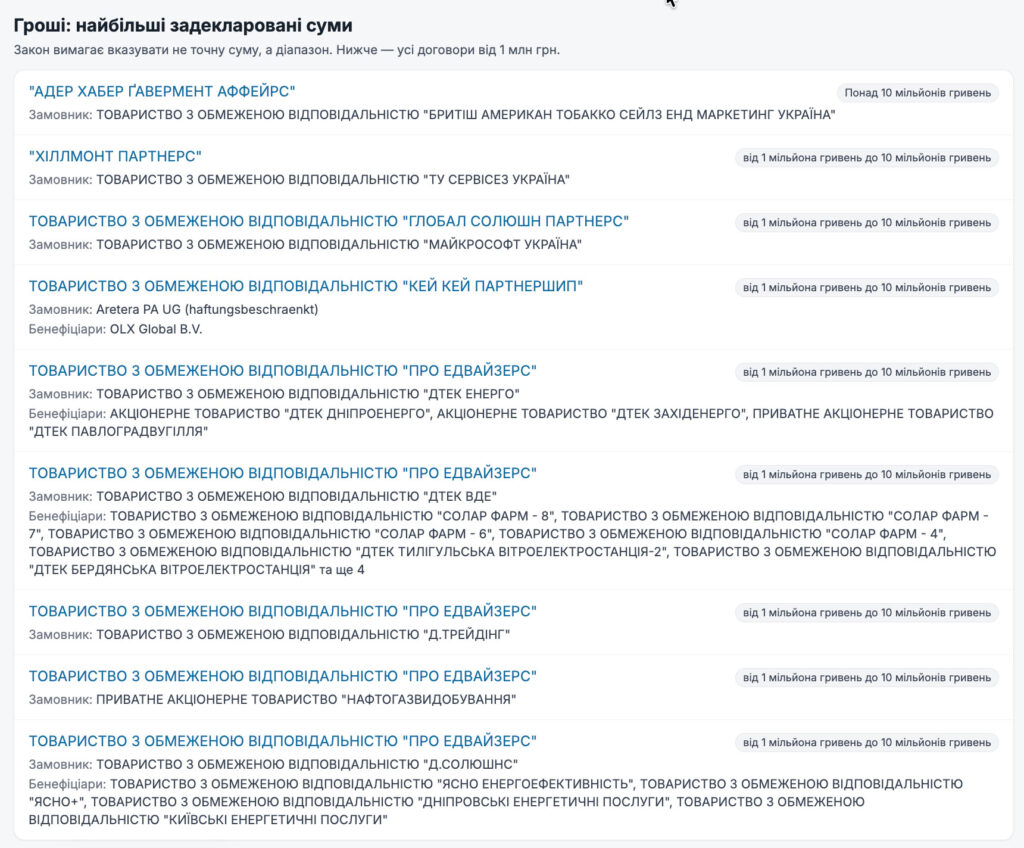
From a Bill to a Law
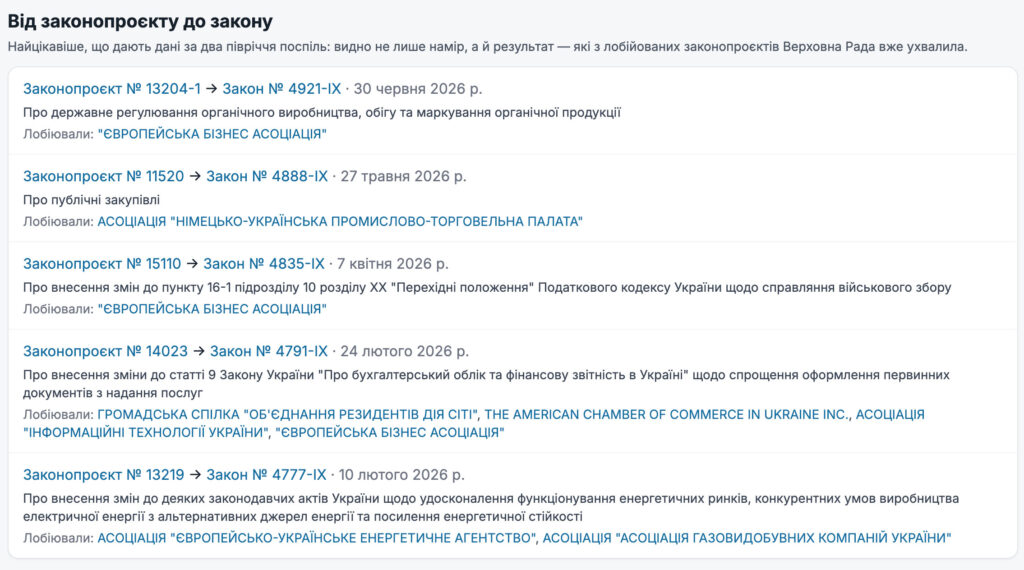
Dmytro Buzanov devoted particular attention to analyzing the effectiveness of lobbying. The study shows that a number of bills that were the subject of declared lobbying activities have already become laws of Ukraine. This is the first time it has been possible to trace the entire cycle—from lobbying for a legislative initiative to its final adoption by parliament.
Open Data as the Foundation of Professional Analytics
All of the analysis is based exclusively on open data from the NACP Transparency Registry and can be independently verified. It is precisely the use of open government data that allows for an objective assessment of the lobbying market’s development, transparency, and effectiveness.
The Ukrainian National Lobbyists Association notes that such studies will contribute to the development of professional standards for lobbying, increase trust in the institution of lobbying, and foster a transparent dialogue between the government, the business community, and civil society.