“GR Is Not Lobbying”: Ukrinform Discusses the Scope of the New Profession and Future Professional Standards
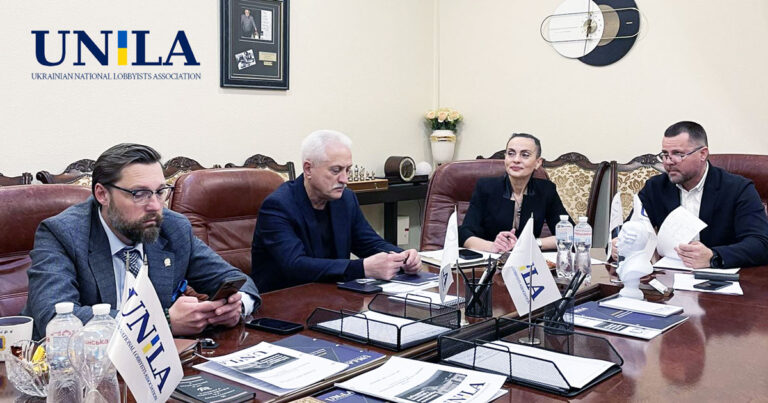
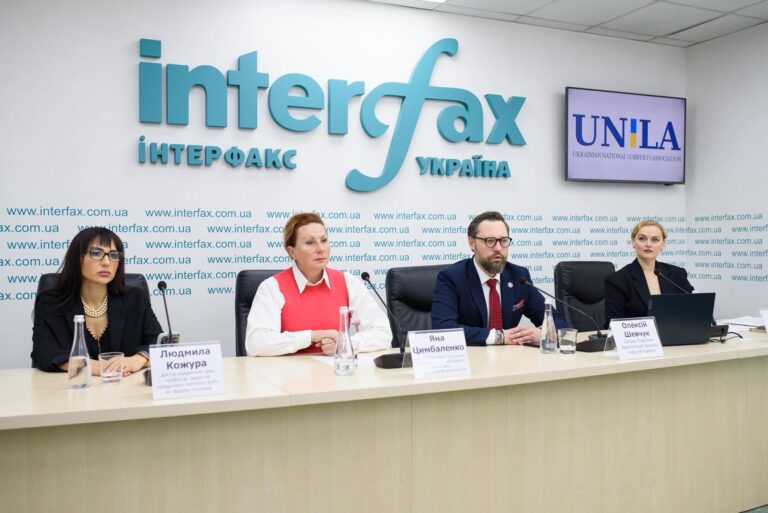
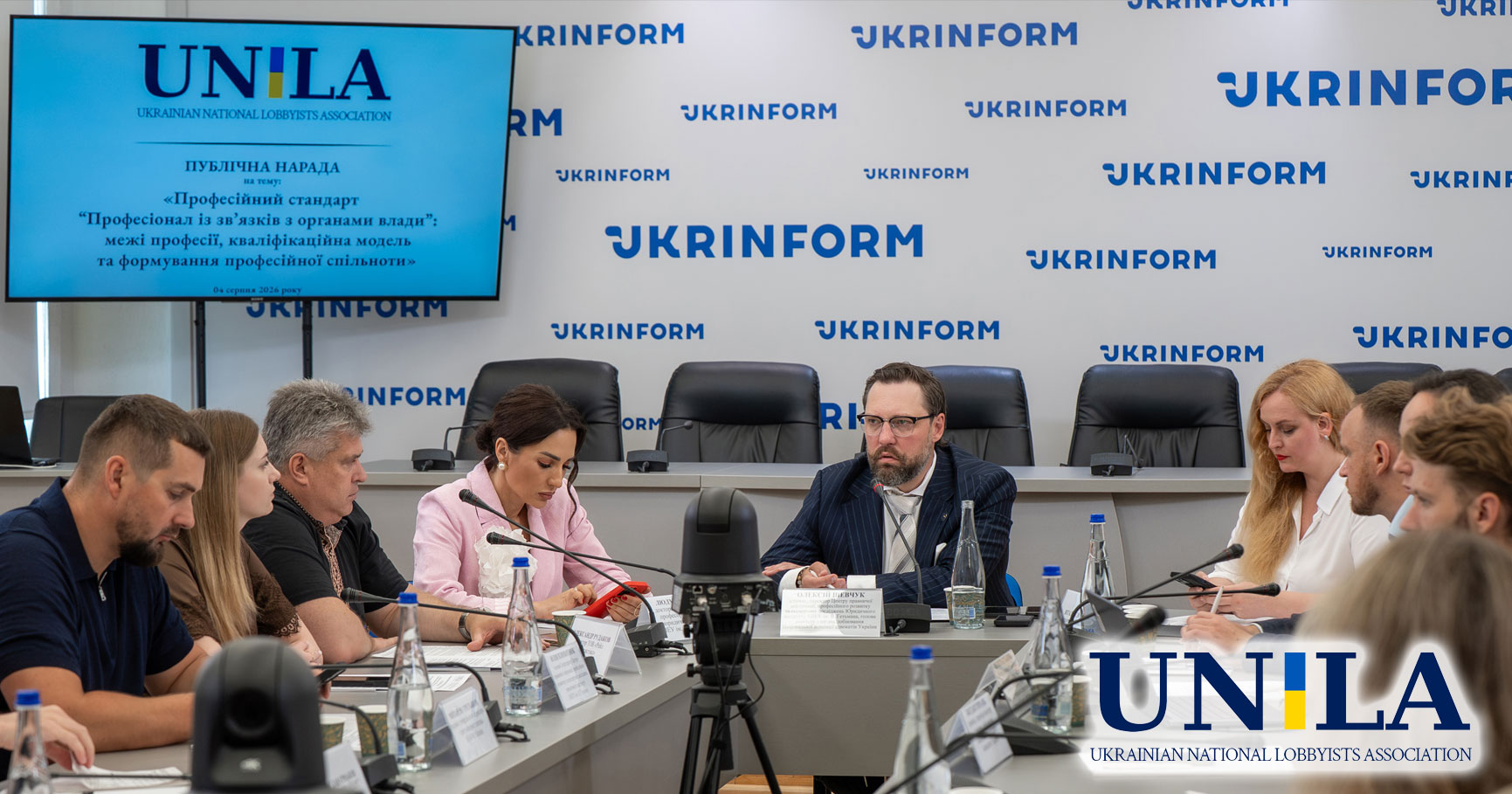
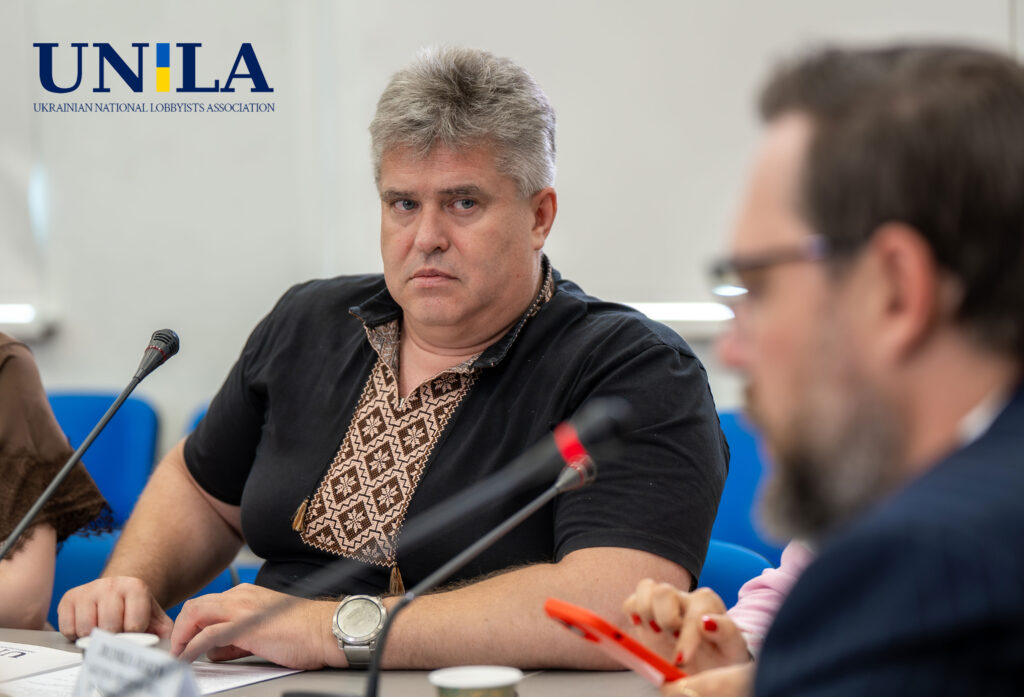
On August 4, 2026, organized by the Ukrainian National Lobbyists Association, as the leading professional platform for expert dialogue in the field of public policy and lobbying, a public meeting was held at the Ukrinform news agency on the topic “Professional Standard ‘Government Relations Professional’: Scope of the Profession, Qualification Model, and Building a Professional Community.”
The purpose of the meeting is to begin forming a working group to develop the professional standard “Government Relations Professional” and to launch a professional discussion on the scope of activities in the field of Government Relations (GR), the qualification model for the profession, and the organizational framework for working on the future document.
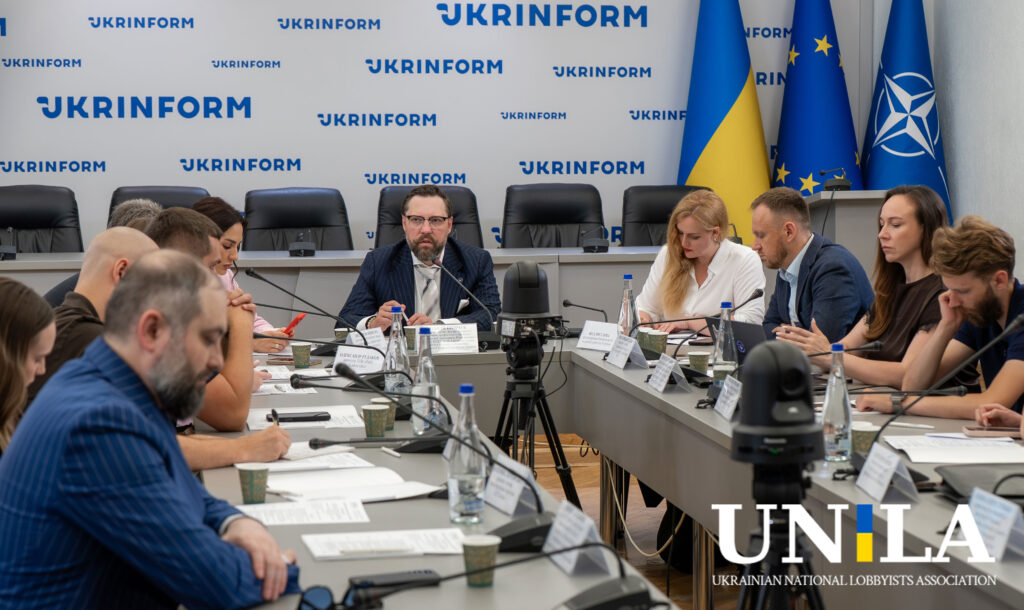
The meeting was moderated by Oleksiy Shevchuk, Chairman of the Board of UNLA. The following individuals joined the discussion: Lyudmyla Kozhura—Doctor of Law, professor, and director of the Law Institute at the Vadym Hetman Kyiv National Economic University; Oleg Krykavsky, Director of Government Relations at ArcelorMittal Kryvyi Rih PJSC; Mykhailo Tretyakov, a representative of SOCAR; Oleksandr Rudakov, a lobbyist and member of the UNLA Ethics Council; Violetta Sukhanova—lobbyist, member of the UNLA Ethics Council, expert on conflicts of interest and strategic interaction between business and the state—as well as other representatives of the business, academic, and expert communities.
The main question of the discussion: Where is the line between GR and lobbying?
The central theme of the event was the distinction between two concepts that are often conflated in the Ukrainian public sphere: Government Relations and lobbying. Lyudmyla Kozhura spoke on this topic, emphasizing that this is not merely about a new professional standard, but about laying the foundation for a new culture of interaction between the government, the business community, academia, and civil society.
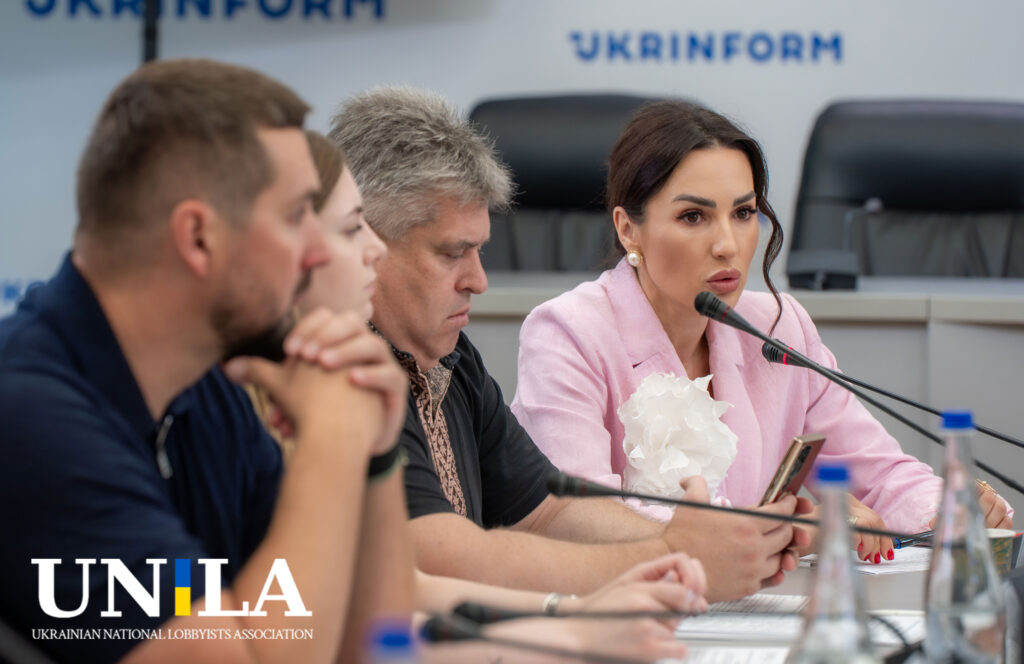
According to her, GR is, first and foremost, a management function aimed at establishing systematic, transparent, and long-term interaction between organizations and public authorities: analyzing public policy, monitoring legislative changes, assessing regulatory risks, participating in public consultations, and shaping the company’s position. Lobbying, in contrast to GR, has a much narrower scope—it involves representing interests with the aim of influencing the content of specific regulatory or administrative decisions.
Ms. Lyudmila pointed out that no democratic country—neither the United States, nor Canada, nor the United Kingdom, nor any EU country—has a separate law on government relations: there, this activity is regulated not as a profession, but indirectly, through legislation on lobbying, conflicts of interest, ethical standards, and transparency in communications with public officials. She cited the Canadian Lobbying Act as a telling example, noting that it regulates lobbying activities exclusively, while the GR departments of large companies operate outside the scope of this regulation as long as their activities do not fall under the legal definition of lobbying. A similar approach is in place in the EU, where the Transparency Register operates rather than separate regulations for the GR profession.
Based on this, Ms. Kozhura urged that future professional standards not duplicate the provisions of the Law of Ukraine “On Lobbying,” but instead to focus on the essence of the profession itself: the mission of a GR specialist, the necessary competencies, knowledge, and ethical boundaries of practice, which together shape professional identity.
Corporate Experience: How the GR Function Is Structured in Business
Oleh Krykavsky shed light on the practical aspects of the topic, sharing his experience in establishing a GR department at a large industrial company. According to him, an effective GR department cannot function without the support of the main office, which prepares presentations and analytical materials, facilitates meetings, and keeps the team informed about ongoing work, thereby freeing up the lobbyists’ time for their core activities.
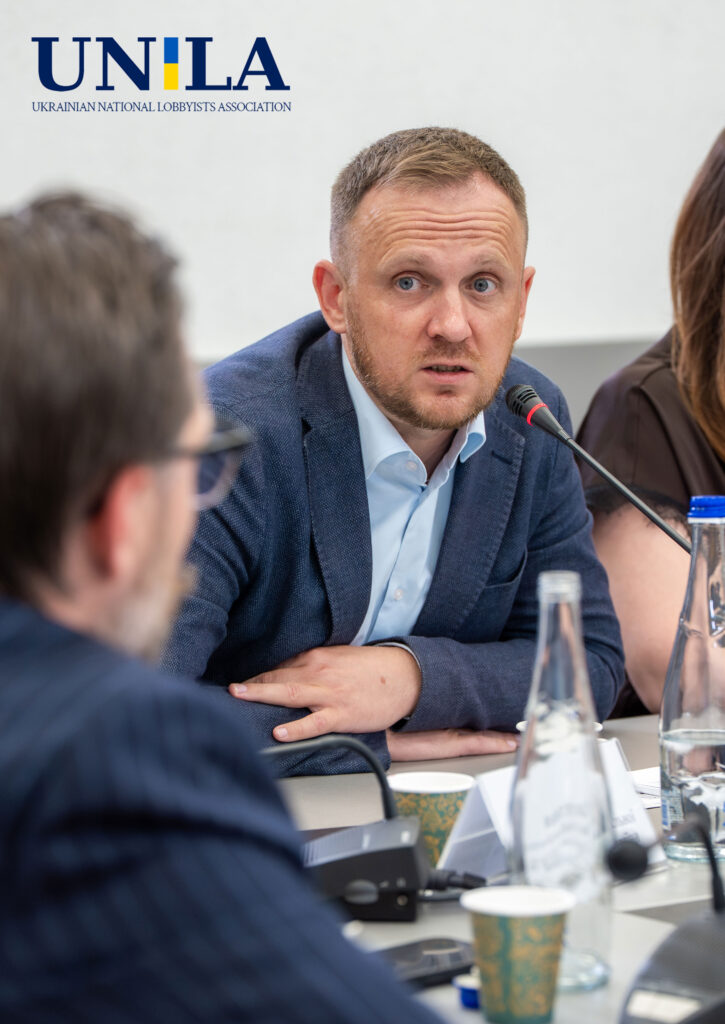
Krykavsky also spoke about his experience registering a company with the EU Transparency Register. According to him, this procedure in the EU is not automatic but requires substantive communication with the registry administrator.
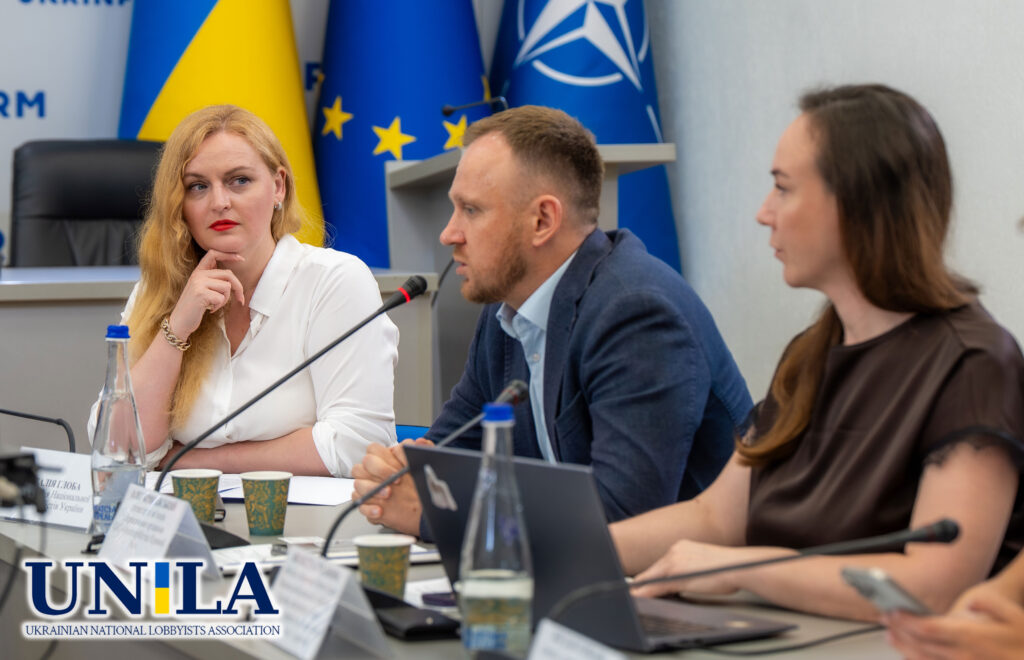
In addition to the official registry of lobbying activities, the company maintains its own, more comprehensive internal registry of contacts with government agencies, from which it filters out those interactions that fall under the definition of lobbying.
Alternative model: delegating the GR function to an industry association
Mykhailo Tretyakov presented a different perspective on organizing GR efforts, sharing SOCAR’s experience. According to him, unlike the model of an in-house GR department described by Oleg Krykavsky, SOCAR chose a different path: it joined forces with other players in a fairly homogeneous but highly competitive petroleum products market and delegated its GR and lobbying functions to a specialized industry association—the Ukrainian Oil and Gas Association. Its members include both Ukrainian and international companies—SOCAR, OKKO, WOG, Shell, Ukrnafta, and others.

According to Tretyakov, the association brings together experts in the market, energy, and construction sectors. The association’s structure includes separate divisions for public relations, information support, and interaction with the Antimonopoly Committee.
Tretyakov noted that SOCAR, as a large vertically integrated company with offices in many countries around the world, follows the best global practices for business-government relations, particularly those from Europe and the United States. Concluding his remarks, he welcomed the emergence of a professional forum for discussion such as UNLA, calling it a concrete step toward a civilized approach to lobbying and engagement with the government.
Participants’ Reactions and Next Steps
Summing up the discussion, the event’s moderator, Oleksiy Shevchuk, noted that lobbying and government relations are finally establishing themselves in Ukraine as two distinct professions, as evidenced by the demand for them from the GR departments of major companies such as ArcelorMittal, SOCAR, DTEK, and others. In his view, these specialists serve as mediators of sorts between business and government, which is precisely why the need for a professional standard for GR specialists is evident today.
The meeting participants agreed that the next step is to form a working group to develop a professional standard for “Government Relations Professionals,” taking into account international experience and the specifics of Ukrainian lobbying legislation. The organizers of the meeting, the Ukrainian National Lobbyists Association, invited representatives from government agencies, the business community, the academic community, and relevant experts to participate in this effort.