UNLA Presented a Roadmap for Interaction Between “Lobbyists and Local Councils/Local Government Bodies”
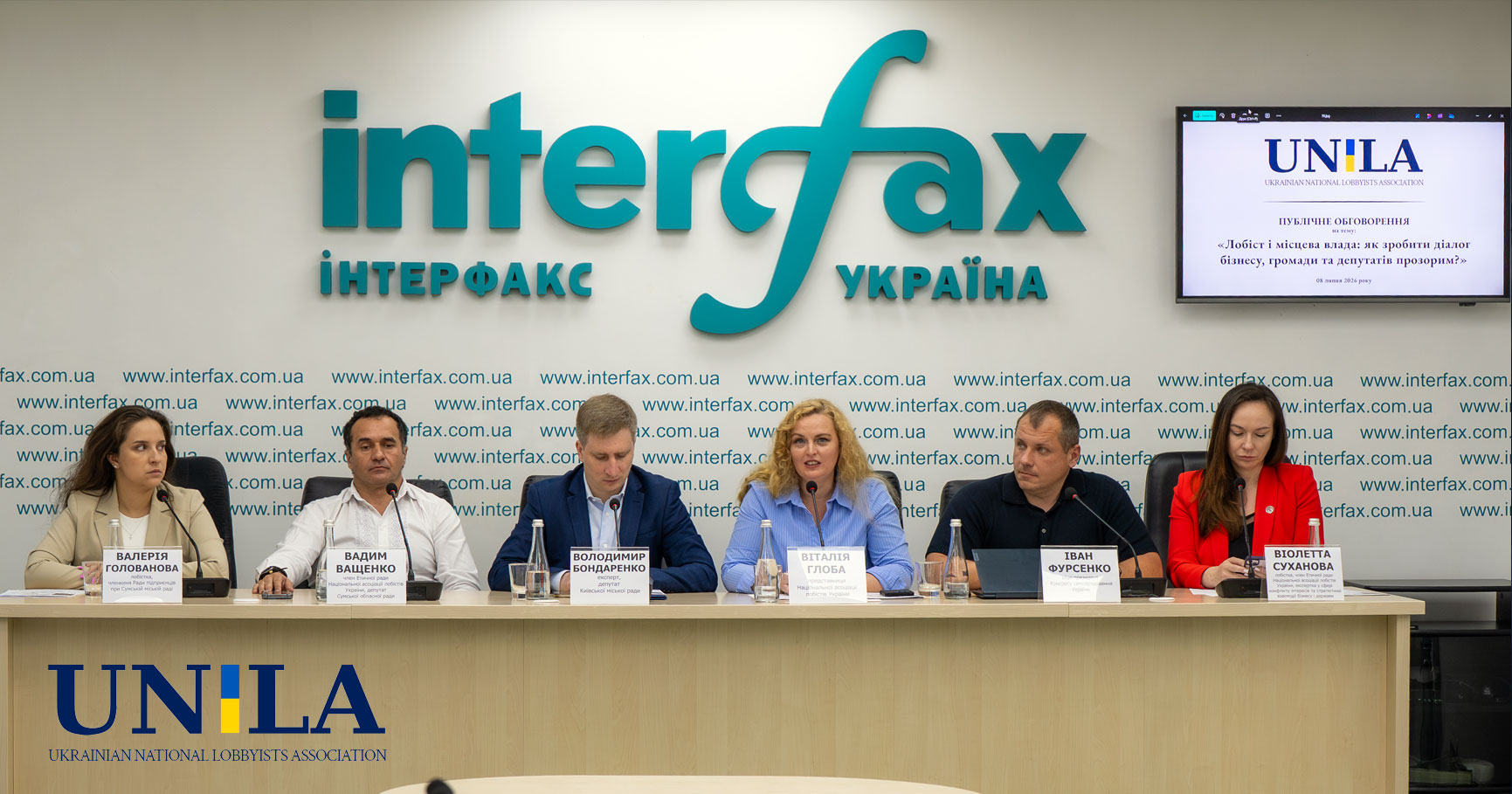
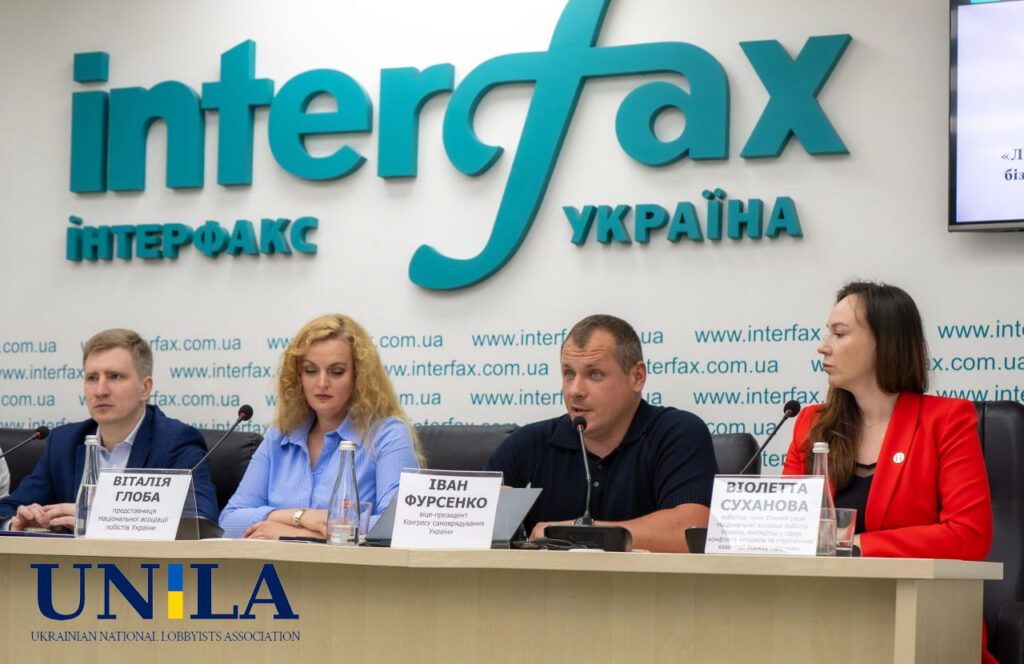
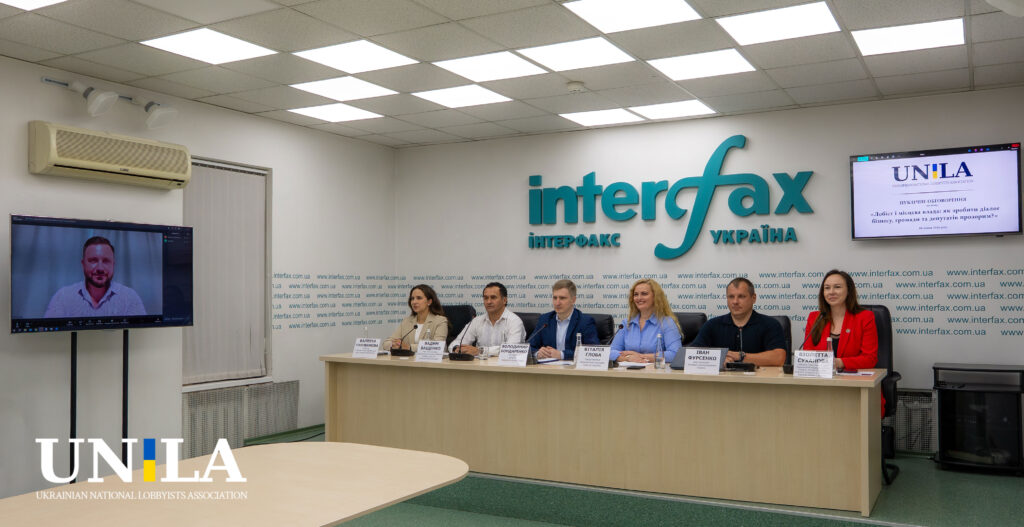
On July 8, 2026, a public discussion titled “Lobbyists and Local Authorities: How to Make the Dialogue Between Business, the Community, and Legislators Transparent?” took place at the Interfax-Ukraine press center. The event was part of the National Association of Lobbyists of Ukraine’s ongoing efforts to establish practical standards for transparent, lawful, and ethical lobbying in Ukraine.
The discussion centered on the issue of establishing uniform rules for interaction between lobbyists, local council members, and local government officials. As noted by Vitalia Globa, a representative of the Ukrainian National Lobbyists Association (UNLA), a lobbyist must openly identify themselves, their client, or beneficiary; clearly define the subject of lobbying; and act strictly within the law, while council members and officials must understand how to properly document contacts, verify a lobbyist’s status, and prevent the risks of unlawful influence.
The event was attended by Vitalia Globa, a representative of the National Association of Lobbyists of Ukraine; Volodymyr Bondarenko, an expert and member of the Kyiv City Council; and Yaroslav Kuts, an attorney, lobbyist, and chairman of A.Dva.Ka.T” Law Firm, and Yaroslav Kuts, a member of the Committee on Lobbying of the National Bar Association of Ukraine (participating online); Ivan Fursenko, Vice President of the Congress of Local Self-Government of Ukraine; Vadym Vashchenko, member of the Ethics Council of the National Association of Lobbyists of Ukraine and member of the Sumy Regional Council; Violetta Sukhanova, lobbyist, member of the Ethics Council of the National Association of Lobbyists of Ukraine, and expert on conflicts of interest and strategic interaction between business and the state; Valeria Golovanova, lobbyist and member of the Entrepreneurs’ Council attached to the Sumy City Council
Roadmap: Seven Steps to Transparent Collaboration
A separate segment of the discussion was the presentation of the “Lobbyist–Local Council/Local Government” Roadmap for Cooperation—a practical guide for communities, council members, officials, and registered lobbying entities.
The document identifies seven key stages of the process: preliminary meeting (initial contact), preparation of analyses and proposals, preliminary evaluation of proposals, review by committees, the executive committee, or structural units, public discussion or plenary session, decision-making, as well as monitoring and evaluation of results. The roadmap also distinguishes between what constitutes lobbying and what does not: citizen appeals, online petitions, public hearings, the defense of one’s own rights, the activities of non-profit civil society organizations, and other forms of public advocacy.
“We are creating a tool that brings interactions between lobbyists and local governments onto a transparent, lawful basis. This is a practical guide for communities, elected officials, and businesses,” note the developers of the Roadmap.
The law provided a framework but left some gaps
Vladimir Bondarenko, a member of the Kyiv City Council and an expert, noted that the lobbying law outlines the general framework for transparent interaction between business and government, but it has the most gaps at the local level—particularly regarding the definition of the subject of lobbying.
“The law established a regulatory framework, but did not provide sufficiently clear operating rules,” said Volodymyr Bondarenko.
According to him, such gaps cannot be closed by NACP clarifications, which do not have the force of law—they must be addressed directly at the legislative level. Summing up the discussion, Bondarenko noted that lobbying is an important step on the path to European integration, and the regulatory framework for this area will develop gradually. The main thing now is not to be afraid to enforce the law while simultaneously working to close its loopholes.
Identification is the first step in any interaction
Yaroslav Kuts, an attorney, lobbyist, chairman of A.Dva.Ka.T LLC, and member of the Lobbying Committee of the National Bar Association of Ukraine, presented a step-by-step guide for a lobbyist’s interaction with a local council. According to him, effective communication should begin with verifying the lobbyist’s status, identifying the lobbyist, determining the subject of the interaction, and ensuring proper documentation at every stage—from submitting analytical materials to monitoring the results.
“Any contact must begin with identification. A lobbyist must disclose that they are a lobbyist, whom they represent, whose interests they are acting on behalf of, which regulatory act is the subject of lobbying, and in what format the interaction is expected to take place. After that, an official or member of parliament can verify the lobbyist’s status in the Transparency Registry and, on that basis, continue the communication,” explained Yaroslav Kuts.
He specifically emphasized that not every appeal by a citizen or business representative to local authorities constitutes lobbying. The subject of lobbying is specifically a regulatory act—that is, a decision that establishes general rules and applies to an indefinite group of people. According to Yaroslav Kuts, it is precisely this distinction that should serve as the basis for the practical application of the law.
Three Questions That Come Up Most Often
Violetta Sukhanova noted that in working with communities and lawmakers, most questions center on three issues: how to determine whether the person in front of you is a registered lobbyist or not; how to act in accordance with the law; and where exactly the line is drawn between professional lobbying and civic advocacy.
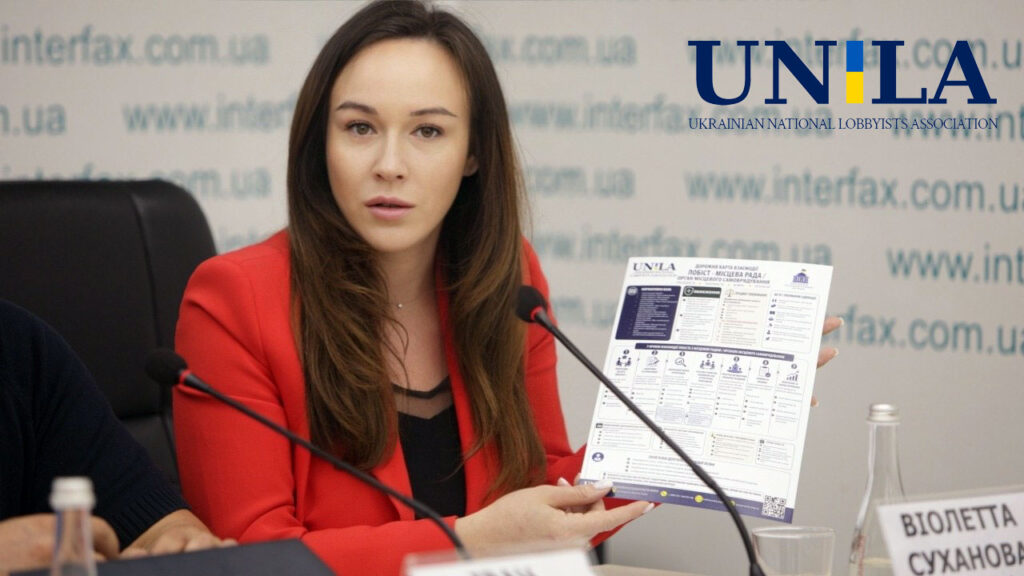
According to her, the first step in any interaction is to verify the status of the person representing the business’s interests regarding the adoption, amendment, or repeal of a regulatory act. If a commercial interest is involved and the formal criteria defined by law are met, such a person must be registered in the NACP’s Transparency Register. This is not a mere formality but an element of legal protection—both for the local government body and for the lobbyist themselves.
Sukhanova also emphasized that not every appeal to a lawmaker or public official constitutes lobbying: citizen appeals, electronic petitions, participation in public hearings, the defense of one’s own interests, or the activities of non-profit civic organizations do not fall under the scope of the Law “On Lobbying.” Lobbying occurs only when all the elements defined by law are present simultaneously: the subject, the object, the subject matter of lobbying, and a commercial interest.
“Transparent lobbying begins not with permission to exert influence, but with clear rules for interaction. These are precisely the rules we are proposing today to Ukraine’s local governments,” said Violetta Sukhanova.
Trust That Can Be Tested
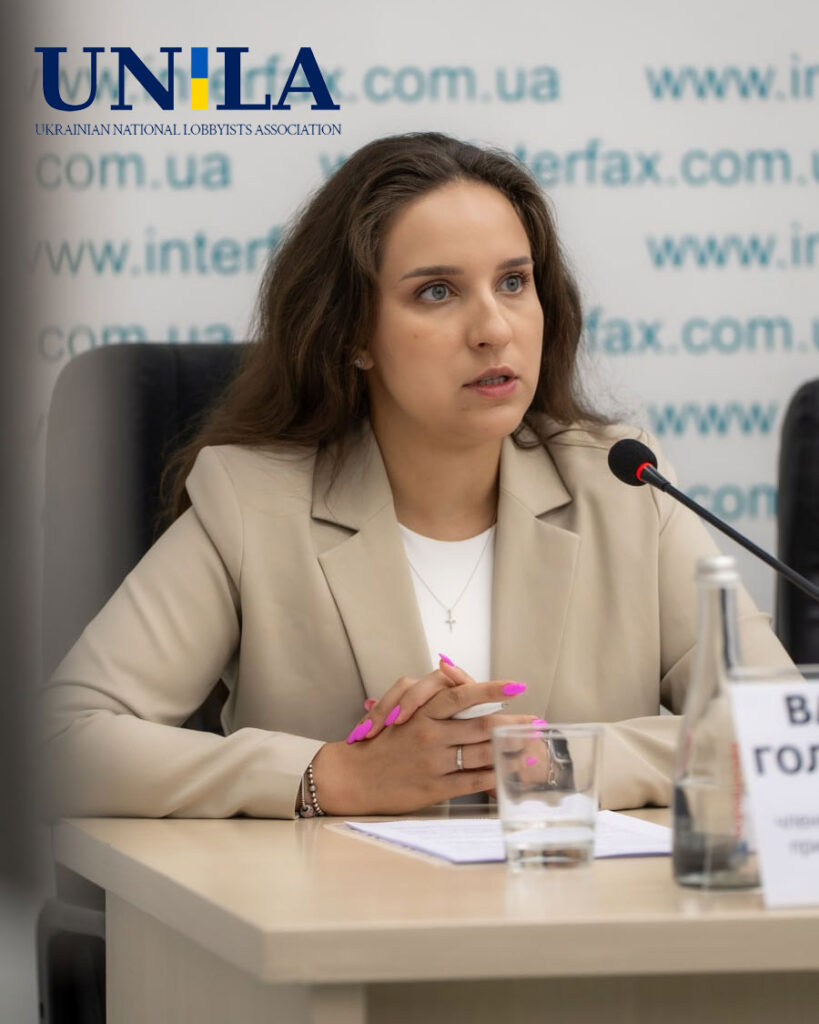
Valeria Golovanova presented practical recommendations for maintaining a contact log and meeting minutes. She noted that trust between a lobbyist and a lawmaker should be based not on verbal agreements, but on a verifiable procedure. According to her, the contact log should record the date, format of the meeting, the person’s status (client or beneficiary), the subject of discussion, and any materials provided—without value judgments, only facts.
“Clear procedures don’t complicate the work—they simplify it,” Valeria Golovanova added.
Conclusion

Participants in the discussion emphasized that lobbying is an important element of Ukraine’s European integration; however, clear procedures, consistent practices, and further improvements to the regulatory framework are necessary for the full implementation of legislation at the local level. The“Lobbyist–Local Council/Local Government Body”roadmap will serve as a useful guide for lobbyists, as well as for council members, local government officials, and community leaders.